



The causes of unpleasant noises coming from your car vary greatly depending on the symptoms.
However, because VWs are so quiet, even the slightest abnormal noise can often be a sign of parts deterioration.
On this page, we have categorized VW abnormal noises by “sound type (sound quality)” and organized them so that you can quickly access “potential causes, level of danger, and related parts . “
If you’re unsure, start here.
The introduction to abnormal noise diagnosis
Search by sound quality
(clack/rumbling/high-pitched/rumble)
Search by situation
(low speed/high speed/starting/deceleration/steps)
Search by part
(engine/suspension/A/C/drive system)
👉See the comprehensive abnormal noise diagnosis page
Abnormal noises can be broadly classified based on the type of sound they sound like.
Choose the sound that best describes your symptoms.
- rumble, rumble, rumble sounds
- Squeaks, squeals, and grinding noises
- Rattling, clunking, and tapping sounds
- Got, bang, rattle
- Vienna hum
- Rattle and grinding noises
- Hiss, hiss, patter
- Vibrating, creaking, crackling, clanking sounds
- Clang (heat contraction/metallic noise)
- Clack (something between a light tap and friction)
- Three things to check first when you hear a strange noise
- Sound quality x Urgency chart (VW abnormal noise diagnosis table)
- Rough rule for urgency based on sound quality
- Regarding the “urgency” of each cause
- The next step in abnormal noise diagnosis
- Summary: Use this page as your “home for abnormal noises”
- Details of defects by vehicle type
- Frequently Asked Questions (FAQ)




rumble, rumble, rumble sounds
This sound is likely to occur due to deterioration of rotating objects at low to high speeds.
representative cause
- Hub bearing wear
- Tire wear/uneven wear
- Wheel imbalance
- Internal contact of blower fan (when air conditioner is on)
Risk level : Medium to high (may lead to damage to the suspension)
👉Click here for detailed causes and repair costs
- Wheel bearing rumbling noise while driving | Causes and repair costs [VW]
- Air conditioner on × Blower fan × Rumbling noise | Causes and repair costs [VW]
- High-speed driving × Hub bearing × Rumbling noise | Causes and repair costs [VW]
Squeaks, squeals, and grinding noises
The noises are mainly from metal friction and belts.
Typical examples are “brakes,” “belts,” and “EPS.”
representative cause
- Brake pad wear
- Rotor rust and uneven wear
- Fan belt deterioration
- Increased load on EPS motor
Risk level : Low to medium (progresses if left untreated)
👉Learn more
- Squeaking noise when decelerating / Braking / Causes and repair costs [VW]
- Braking x Pads/Rotors x Squeaking | Causes and Repair Costs [VW]
- Steering operation × Belt/Hydraulic system × Squeaking/Grinding noise | Causes and repair costs [VW]
- Immediately after starting, belt/tensioner squealing noise | Causes and repair costs [VW]
- Curve x Undercarriage Bush x Screeching Noise | Causes and Repair Costs [VW]
Rattling, clunking, and tapping sounds
The most common complaint about VW is the “rubber deterioration in the suspension” noise.
This can almost always be explained by wear on the links and bushings.
representative cause
- stabilizer link
- Lower arm bush
- Looseness of plastic parts in the suspension
- Slight vibrations in the interior (while driving)
Danger level : Medium (If the noise increases while driving, check it early)
👉Learn more
- Air conditioner on × Blower motor × Rattling noise | Causes and repair costs [VW]
- Low Speed x Suspension x Knocking Noise | Causes and Repair Costs [VW]
- Low Speed x Suspension Link x Rattling Noise | Causes, Repair Costs & Whether the Car Can Be Driven [VW]
- Air conditioner on × Blower fan × Pattering noise | Causes and repair costs [VW]
- Idling x Engine Mount x Rattling Noise | Causes and Repair Costs [VW]
Got, bang, rattle
Impact noises are common when going over bumps or curves.
They are often caused by fatigue of the shock absorbers and suspension.
representative cause
- Shock absorber loosening
- Bumper rubber damage
- Engine mount wear
- Large rattle in the interior panel
Risk level : Medium (deterioration of ride comfort + increased strain on other parts)
👉Learn more
- Low Speed x Suspension x Rumbling Noise | Causes and Repair Costs [VW]
- Bumps x Shocks/Bushes x Banging Noise | Causes and Repair Costs [VW]
- Curb/Suspension/Hub/Rattling Noise | Causes and Repair Costs [VW]
Vienna hum
High-frequency noise from rotating motors.
Many of these noises are from rotating parts such as turbos, EPS, and blowers.
representative cause
- Turbocharger
- EPS motor
- air conditioner blower
- Intake duct resonance
Risk level : Medium to high (be careful with turbo)
👉Learn more
- Steering operation × EPS/pump × whining noise | Causes and repair costs [VW]
- Whinny noise during acceleration × Turbo/intake system × | Causes and repair costs [VW]
- Accelerator pedal × Turbo/Fan × Whinny noise | Causes and repair costs [VW]
- High-speed driving × Wind/mold × Whistling noise | Causes and repair costs [VW]
- Air Conditioner ON × Blower/Flap × Whistling Noise | Causes and Repair Costs [VW]
Rattle and grinding noises
Dangerous sounds like scraping or rubbing.
They can also be a sign that a rotating object is about to break.
representative cause
- Catalyst cracks and heat shield interference
- Engine mount damage
- Heavy wear on bearings
- Brake caliper sticking
Risk level : High (early inspection recommended)
👉Learn more
- Rattling noise when starting the car | Causes and repair costs [VW]
- Accelerator pedal × Engine/heat shield × Rattling noise | Causes and repair costs [VW]
- Braking x Pad/Caliper x Grinding Noise | Causes and Repair Costs [VW]
- Grinding noise when decelerating × Brake/bearing × | Causes and repair costs [VW]
Hiss, hiss, patter
The “light friction” sounds of wind, flaps, and belts.
representative cause
- Air conditioner flap malfunction
- Blower motor contact
- Belt slippage after a puddle
- The sound of tires and road friction
Risk level : Low to medium (check only if recurrence occurs)
👉Learn more
- After a puddle × Belt/Brake × Shaking noise | Cause and whether the car can be driven or not [VW]
- While driving, tire/road surface rustling noise | Causes and repair costs [VW]
- What causes a hissing noise when the air conditioner is turned on? Repair costs and is it safe to drive? We also explain the risks of leaving it unattended.
- Air conditioner on × Blower fan × Pattering noise | Causes and repair costs [VW]
Vibrating, creaking, crackling, clanking sounds
Fine noises that come from “weakly fixed parts” such as resin, interior, and heat shrinkage.
representative cause
- Resonance behind the dashboard
- Floating interior panel
- Muffler heat shrinkage noise
- Resonance around the luggage compartment
Risk level : Low (however, maintenance is recommended only if reproducible)
👉Learn more
- Idling x Interior/Plastic Parts x Rattle Noise | Causes and Repair Costs [VW]
- High-speed driving × Interior trim/component resonance × Vibration noise | Causes and repair costs [VW]
- Bumps, Interior/Suspension, and Creaking Noises | Causes and Repair Costs [VW]
- Heat shrinkage and crackling noises after engine shutdown | Causes and repair costs [VW]
Clang (heat contraction/metallic noise)
Clack (something between a light tap and friction)
- Rattling noise when turning on the air conditioner: What is the cause of this strange noise in a VW and what is the estimated repair cost?
- Idling x Belt x Rattling Noise | Causes and Repair Costs [VW]
Three things to check first when you hear a strange noise
- Make a note of the circumstances under which the noise occurs
(low speed/high speed/acceleration/air conditioner on/bumps, etc.) - Roughly determine the location of the sound
(front/back/left/right/indoors)
It will definitely fall into one of the eight categories on this page that classify sound quality .
Sound quality x Urgency chart (VW abnormal noise diagnosis table)
| Sound quality | Common causes (VW) | Urgency | Guidance on whether or not the vehicle can be driven |
|---|---|---|---|
| Go go/rumbling | Hub bearings and tires | high | NG (slow speed to factory) |
| Vienna (when accelerating) | Turbo/intake system | high | NG (Unable to run under load) |
| Rattle (starting/idling) | Engine mounts and heat shields | Medium to high | Drive carefully |
| Squeaking (brakes) | Pad wear/rotor contact | Medium | Only close range allowed |
| Grrr (when braking) | Pad remaining zero/caliper stuck | high | NG |
| Clunking/Rattling (slow speed) | Suspension link bushings | Medium | Can be driven (early inspection required) |
| Clang/crackle (after stopping) | Thermal shrinkage of catalysts and exhaust gases | low to medium | OK |
| Screeching (immediately after starting) | Belt tensioner | Medium | Driving possible (Caution: deterioration) |
| Chatter (interior) | Resin parts and interior lining | low | OK |
| Whirling (while driving) | Tires, road surfaces, and moldings | low | OK |
| Swoosh (after a puddle) | Belt slippage | low | OK |
| whirring (high speed) | Wind noise/floating molding | low | OK |
| Flap (air conditioner on) | Blower fan flap | Medium | Can be driven |
| Rumbling (fast, continuous) | Hub bearing (deteriorating) | high | NG |
You can scroll
Rough rule for urgency based on sound quality
| category | Applicable sound quality | Urgency trends | reason |
|---|---|---|---|
| Rotating object system | Go, rumble, whir | high | Deterioration of rotating parts suddenly worsens |
| Braking system | Squeak, grind | High to medium | Brake-related parts are directly connected and dangerous |
| Suspension system | Clunk, clunk | Medium | Large impact on vibration and lifespan |
| Belts | Squeak squeak, shriek | Medium | Belt breakage has a negative impact on multiple systems |
| Interior and exterior | Chatter, creak, whistle | low | No impact on vehicle operation |
| Heat shrinkable | Clang, smack | low to medium | There is no problem if there is no structural deterioration. |
You can scroll
Regarding the “urgency” of each cause
The urgency of an abnormal noise varies greatly depending on which part is involved.
The nature of the part (moving, stopping, supporting, or controlling the car) is more important than the sound itself.
Here we will organize the most common causes of strange noises in VWs into three levels of urgency .
[Urgency: High] Sounds from important parts that affect driving
If you hear this noise, it is safe to have it checked as soon as possible , as it could lead to the vehicle being unable to be driven or a serious breakdown .
Bearings (hub bearings)
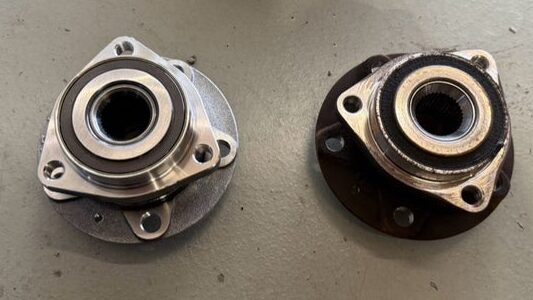
- Rumble/rumble/growling noise at high speeds
- If left unattended, there is a risk of the rotating shaft burning out.
- High-speed driving becomes unstable
Symptoms : Sound gets louder on curves, sound is proportional to speed
Turbocharger (Vienna/Huhn)
- Metallic noise from over-revving/abnormal intake
- If left unattended, there is a risk of turbo blowout.
- It may also cause the check engine light to come on
Symptoms : Whinny noise and loss of power only when accelerating
👉 What is the estimated cost to repair a malfunctioning VW turbocharger?
Damage to catalyst/heat shield (rattle)
- Rattling/clacking/metal-like sounds
- The catalyst may fall off or cause an exhaust leak.
- There are cases where the vehicle will not be inspected properly.
Symptoms : Loud noise when idling, reverberation from behind
Grinding and grinding noises from the brake system
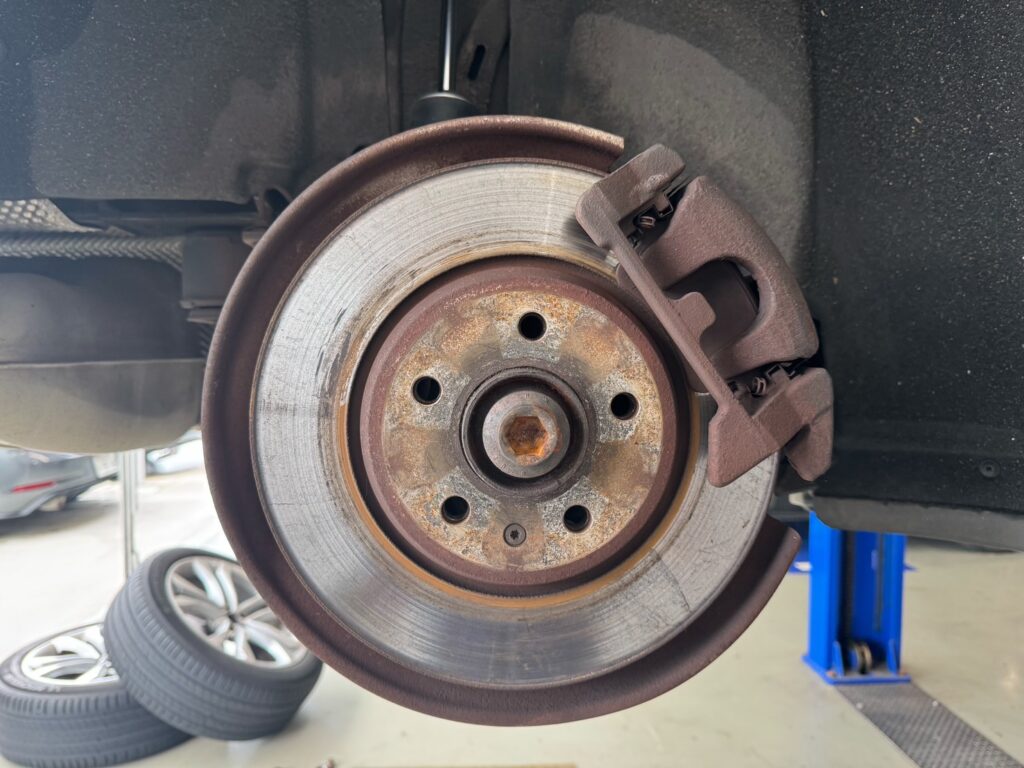
- Caliper sticking
- The pads are exceeding their limits and scraping the rotor.
- High risk due to direct connection to the “stop” function
Symptoms : Grinding noise at low speed, heat on one side
👉A thorough explanation of the timing, cost, and selection of brake pad replacements!
→The most dangerous points are “rotating parts,” “high temperature parts,” and “braking parts.”
These are likely to cause abnormal noises, which are signs of structural deterioration.
[Urgency: Medium] The vehicle can be driven, but requires prompt maintenance.
This is a “progressive” noise that is not immediately dangerous, but can lead to major malfunctions if left unattended.
Deterioration of suspension bushings/links (clunking/rattle)
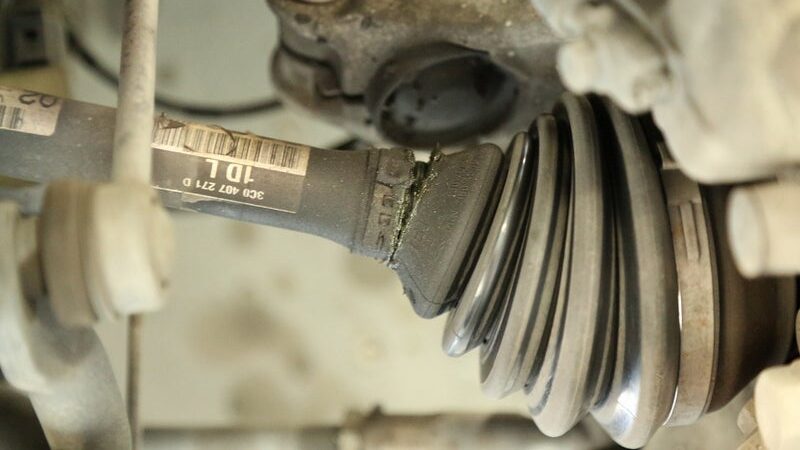
- A very common symptom in VW
- Affects driving stability
- If left unattended, the shock arm will be subjected to increased strain.
Symptoms : Clunking on bumps, rattling at low speeds
Fan belt tensioner (squeak)
- Early signs of deterioration
- If left unattended, the belt may break, which may lead to the alternator stopping.
- Causes of air conditioner malfunction
Symptom example : Noise occurs only on rainy days/Noise occurs immediately after starting
Deterioration of engine mounts (rattling/rattle)
- The vibrations are converted into sound and can be heard
- If left unattended, deterioration will continue to spread to the transmission mount.
- Ride comfort and shift shock worsen
Symptoms : Rattling when starting, shaking when idling
Light brake pad wear (squeaking)
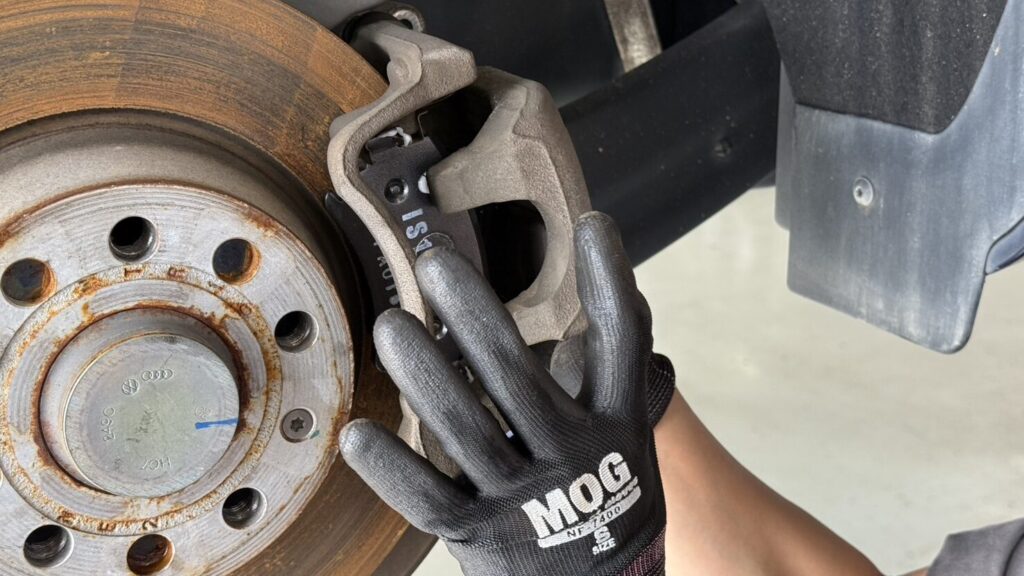
- It’s not dangerous considering the noise
- Replace the rotor before it gets damaged.
Example of symptom : Squeaking only just before stopping
👉A thorough explanation of the timing, cost, and selection of brake pad replacements!
→ The key point about the medium risk is that “if the deterioration progresses, it will spread to other parts.”
“Waiting to see what happens while the noise is still there” is likely to be costly.
[Urgency: Low] Noise that doesn’t affect the car, but is annoying
This is in the “comfort” category and does not affect driving performance.
However, if the reproducibility is high, there may be looseness in the fixing parts.
Interior chatter/resonance of plastic parts (chat/creak)
- Coupler resonance behind the dashboard
- Loose interior trim clips
- Interference noise around the luggage compartment
Symptoms : Vibration only at certain speeds, creaking on bumps
Wind noise from moldings and exterior parts (whispering)
- The mall shrinks over time.
- It may float due to the influence of the car wash.
Example of symptom : whistling only at high speeds
The whoosh after a puddle
- Belt slippage
- Minor symptoms that disappear if left untreated
→The key to low risk is that the car’s operation is not affected.
However, if the noise suddenly gets louder, that’s a different matter.
A checklist to instantly determine the level of urgency
✔ Sound is “proportional to speed” → Rotating object (high to medium)
✔ The sound is “only on bumps and curves” → Suspension (middle)
✔ Sound changes when the air conditioner is on → Wind type (low to medium)
✔ The sound gets louder with acceleration → Turbo/Intake (high)
✔ The noise “occurs even when the vehicle is stopped” → Catalyst/Interior (low to high)
If you’re unsure, just go with the “higher risk” option.
The most important thing when judging abnormal noises is
to “if in doubt, treat it as the higher number.”
VW in particular,
- turbo
- bearing
- Brake caliper
- Catalysts
and other components have the characteristic of being prone to deterioration.
Taking action early often results in cheaper repairs.
The next step in abnormal noise diagnosis
If you are aware of any strange noises, reading the following in order will help you find the cause as quickly as possible.
- Summary by sound quality (this page)
- Details page for the relevant sound quality
- Individual symptom articles (e.g., slow speed x rattling / fast speed x whistling)
- Repair costs by part (suspension, engine, electrical)
- Structure and failure explanation for each part (technical article)
Summary: Use this page as your “home for abnormal noises”
When it comes to strange noises in VWs, the sound quality is the gateway to the cause .
Bookmark this page so you can easily find it whenever new articles are added.
If you leave the strange noise unattended, it can affect surrounding parts.
It’s best to check it out as soon as possible while the noise is still small.
Details of defects by vehicle type
Even if the “way” of the malfunction is similar, “which model has the most common problems” differs slightly depending on the model.
The following page summarizes the trends by model and common malfunction cases among other owners.
You can scroll
You can scroll
Frequently Asked Questions (FAQ)
Q1. I’m hearing a strange noise, but I don’t know how to classify it. How can I check?
A. It’s effective to first take note of when, where, and what kind of sound it is. Checking the situation, such as whether it’s proportional to speed, whether it comes from bumps, or whether it changes when the air conditioner is on or off, will help narrow down the sound quality category.
Q2. The sound comes and goes. Should I still get it diagnosed?
A. Even if the noise is intermittent, if it is caused by a rotating object, turbo, belt, etc., it will gradually get worse. Even if it is difficult to reproduce, if it is bothering you, we recommend getting it diagnosed as soon as possible.
Q3. What kind of abnormal noises are safe to continue driving?
A. Mild resonances of fixed parts such as interior rattles and wind noises do not have a significant impact on driving. However, rumbling (bearings), whining (turbo), and grinding (brakes) may be so severe that you will not be able to drive, so caution is advised.
Q4. I’m not sure whether to go to a dealer or a specialized shop when I hear a strange noise.
A. Because VWs have unique parts and diagnostic equipment, it’s best to go to a dealer or a specialized shop that specializes in VWs. Since differences in service experience can directly affect diagnostic accuracy in this genre, it’s safer to go to a shop that handles a lot of imported cars.
Q5. Can I identify the cause of the abnormal noise myself?
A. It is possible to narrow down the possible causes based on the sound quality and the situation. However, since a definitive diagnosis often requires lifting the vehicle up or disassembling parts, it is safer to leave the final decision to a professional mechanic.

