


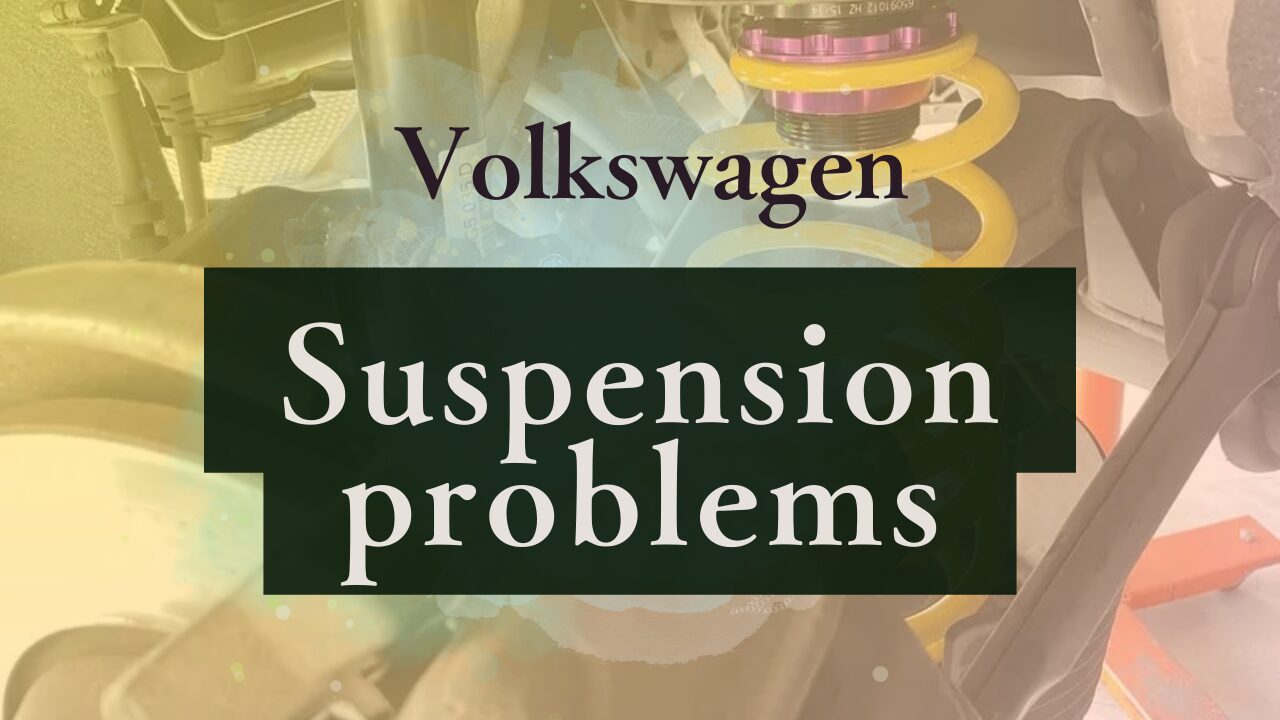
This is a comprehensive navigation page for articles related to VW suspension.
“There is a rattling or clunking noise when going over bumps.”
“The steering wheel shakes at high speeds.”
“It wobbles when going straight.”
“It squeaks when I step on the brakes.”
This “discomfort with the suspension and brakes” is a particularly common topic of consultation among VW owners.
The suspension is
- suspension
- Various bush mounts
- hub bearing
- Wheel alignment
- Brake set
- Tires and Wheels
- Power steering system
It is made up of many parts such as the above, and if even one part deteriorates, it will immediately affect ride comfort and straight-line stability.
On this page, we will introduce the articles related to the suspension of Umi to Kaze to Tomato.
- Search by symptoms
- Search by part
- Search from the Maintenance & Custom menu
- Digging deeper through technical explanations and work examples
We have organized the information from these four perspectives.
Start by asking yourself, “Which of these symptoms best describes my symptoms?”
and then proceed to the page that interests you.
VW Suspension Special Feature | Nile Mecha Channel Example Article Navigation
- Search for suspension problems by “symptoms”
- Search by part | Suspension, bushings, bearings, alignment
- Brake-related problems and maintenance
- Change the ride feel with custom suspension and body reinforcement
- If the suspension is damaged due to an accident or external factors
- The first check you can do yourself and the line you should leave to the professionals
- If you’re unsure | Articles to read as a starting point
- Details of defects by vehicle type
- Frequently Asked Questions (FAQ)




Search for suspension problems by “symptoms”
Unstable straight line driving, wobbling, steering wheel is pulled
If you feel like your car isn’t driving straight or that ruts are affecting your steering, the condition of your suspension, bushings, alignment, and tires are likely to be suspect.
The link explains the cause and estimated repair costs for each symptom.
- Causes of steering wheel slippage on bumps | How to identify looseness in the suspension
- Why steering wheels shake at high speeds | Mechanism that reduces straight-line stability
- What causes the steering wheel to drift to the right (left)? Alignment or tires? Which is the problem?
- Causes and solutions for getting stuck in road ruts | Why your VW’s direction of travel is off
- Summary of causes when a car doesn’t run straight and makes strange noises | Why misalignment and noise occur at the same time
- Causes of increased steering play | If you feel a “play” in the steering wheel
- Why doesn’t my car drive straight after changing tires? | Causes of misalignment immediately after tire change
- Straight-line driving becomes unstable due to deterioration of suspension bushings | Symptoms and how to identify them
- Symptoms of EPS compensation not working | Straight-line driving problems even without a warning light
- Causes of a drifting car due to suspension wear | Signs of shock deterioration
For a broader range of symptoms of “dizziness,” this may also be helpful.
- Causes of vehicle wobble at high speeds | Reasons for increased wobble when driving straight
- Causes of side-to-side shaking on bumps | How to tell if suspension bushings are worn out
- Causes of the feeling of rolling outwards when turning | Reasons for increased roll
- Causes of car weakness in wind | Checkpoints for wobbling in crosswinds
- Causes of wobbling and strange noises | How to tell when wobbling and noises occur at the same time
- Causes of wobbling and heavy (light) steering | Points to suspect steering system abnormalities
- Causes of excessive rear sway | Checklist for when only the rear end is wobbling
- Car-related causes of car sickness | Reasons for increased dizziness
- If your car is unsteady after installing aftermarket suspension | Problems with settings and compatibility
- Causes of wobbling due to tire pressure and uneven wear | Surprisingly common basic problems
High speed vibrations/steering wheel shaking
The vibrations that only occur on the highway
- Wheel balancing
- hub bearing
- Uneven tire wear
- Undercarriage rattle
- Wheel distortion
etc. are often involved.
- Why does the steering wheel shake at 100km/h? | A thorough explanation of steering wheel shake at high speeds
- Causes of vehicle vibration at 80-100km/h | Symptoms vary depending on speed range
- Symptoms of shaking at high speeds and instability when going straight | Simultaneous shaking and wobbling
- Why vibrations become stronger when accelerating | The true nature of the shaking that occurs as speed increases
- How to tell if vibrations and strange noises (grunting) are present | Identify the cause by the type of noise
- Difference between poor wheel balance and poor suspension | Checkpoints to distinguish by symptoms
- Cases where road noise and vibration are easily confused | Noise? Vibration? Identifying the cause
- Causes of vibration at high speeds after tire change | Common problems immediately after tire change
- If vibration occurs at high speeds immediately after vehicle inspection | Causes of increased vibration after maintenance
- Wheel distortion and vibrations after driving over a curb
Abnormal noise around the suspension when going over bumps or at low speeds
Noises such as “clunking,” “banging,” and “creaking” that occur at low speeds and over bumps are often caused by looseness in the suspension, bushings, or links.
Volkswagen Abnormal Noise Diagnostic Guide | Causes, Repair Costs, and Urgency
- [Noise Repair] Causes and Repairs of “Gurgling” Noises from the Suspension of Volkswagen Vehicles
- [Noise Repair] Causes and Repair Guide for Volkswagen Suspension Rattling
- Low Speed x Suspension x Creaking Noise | 3 Causes and Repair Costs [VW]
- Low Speed x Suspension x Knocking Noise | Causes and Repair Costs [VW]
- Low Speed x Suspension x Rumbling Noise | Causes and Repair Costs [VW]
- Low Speed x Suspension Link x Rattling Noise | Causes, Repair Costs & Whether the Car Can Be Driven [VW]
- Bumps x Shocks/Bushes x Banging Noise | Causes and Repair Costs [VW]
- Bumps, Interior/Suspension, and Creaking Noises | Causes and Repair Costs [VW]
- Curve x Undercarriage Bush x Screeching Noise | Causes and Repair Costs [VW]
- Curb/Suspension/Hub/Rattling Noise | Causes and Repair Costs [VW]
- While driving, tire/road surface rustling noise | Causes and repair costs [VW]
- High-speed driving × Hub bearing × Rumbling noise | Causes and repair costs [VW]
- Wheel bearing rumbling noise while driving | Causes and repair costs [VW]
Abnormal noises while braking are covered in detail in the brake system article.
- Squeaking noise when decelerating / Braking / Causes and repair costs [VW]
- Braking x Pads/Rotors x Squeaking | Causes and Repair Costs [VW]
- Braking x Pad/Caliper x Grinding Noise | Causes and Repair Costs [VW]
- After a puddle × Belt/Brake × Shaking noise | Cause and whether the car can be driven or not [VW]
Search by part | Suspension, bushings, bearings, alignment
Suspension and shock
This is a basic part to use when you are concerned about a worsening ride, a bouncy feeling, or increased roll.
- VW Suspension Malfunctions and Estimated Repair Costs
- Costs and benefits of shock absorber replacement | Restore ride comfort and stability!
- Cost and effectiveness of replacing the dust cover | A small key player in protecting the life of shock absorbers
- [Suspension Refresh] How to restore your VW to a new car ride! What are the costs and benefits?
Suspension bushes, mounts, arms
Although wear and tear is hard to see, bush mounts have a major effect on driving performance.
- What is the problem with VW suspension bushings and what is the estimated repair cost?
- Symptoms, causes, and repair costs of deteriorated lower arm bushings | A comprehensive look at common VW problems
- “Squish” noise when going over bumps: Causes and solutions for the common suspension noise in Golf 7/Passat B8 | Lower arm bush structure and first aid
- Multi-link suspension bush deterioration and repair: Causes and solutions for Audi/VW front arm noise
- Basic knowledge of lower arm bush replacement – Symptoms of deterioration, structure, and replacement procedure
- Ball joint boot replacement in practice – Differences from assy replacement and how to judge maintenance
VW Lower Arm Bush Replacement Case | Nile Plus
Hub bearings and wheel parts
This is the part that involves “gurgling,” “rumbling,” and “high-speed vibrations.”
- Summary of VW wheel bearing malfunctions and repair costs
- What are the costs and benefits of replacing hub bearings? Prevent noise and improve driving performance!
- What is the true cause of the “rumble” noise that is common in Touran cars? | Hub bearing abnormality diagnosis and repair procedure
- Steering wheel vibration during high-speed driving – The impact of wheel balance on driving stability
- Forged Wheel Reconditioning Technology – Corrosion Repair and Powder Coat Finish
- Aluminum Wheel Repair Technology and Quality Control – Repair, Painting, and Remanufacturing Processes
Wheel alignment and tires
This is for those who are concerned about straight-line stability, steering center, and uneven wear.
- What is a VW wheel alignment problem and what is the estimated repair cost?
- Causes of steering wheel tilt to the right and corrective measures | Basics of toe adjustment and centering for the Polo 6R
- Next-generation tire changing technology – Ravaglioli leverless and tableless tire changer: its design and advantages
Drive shaft boots
If you are concerned about vibrations when starting, rattling noises, or grease leaks, click here.
Brake-related problems and maintenance
👉 A comprehensive guide to VW brake problems: Symptoms, causes, repair costs, and related maintenance
Brake troubles and basic maintenance
- What is the estimated cost to repair VW brake problems?
- [Introduction to VW maintenance] A thorough explanation of the timing, cost, and selection of brake pad replacements!
- Is it necessary, when, and how much does it cost to replace brake fluid in a VW car?
- Brake Oil Change Basics and Safety Management – An Efficient Maintenance Method Using an Electric Bleeder
- Basic procedures and practical points for disc brake maintenance | From pad replacement to squeal prevention
- Summary of brake-related construction costs and benefits | What maintenance supports VW’s driving performance and peace of mind?
Brake customization and dress-up
- A thorough explanation of the appeal and benefits of NEUSPEED big calipers!
- What are stainless steel mesh brake hoses? Explaining the effects, costs, and benefits for VW vehicles
- What are the costs and benefits of installing slotted rotors? Improved braking performance will change your driving!
- [Caliper Paint] Make your car’s undercarriage stylish! A guide to choosing and painting colors that stand out on your VW
- Correct procedure and precautions for painting calipers | Technical points that affect surface preparation, paint coloring, and durability
- Volkswagen/Audi low-dust brake pad replacement and maintenance precautions
- New Beetle caliper painting and timing belt replacement – combining practical maintenance with a beautiful finish
Change the ride feel with custom suspension and body reinforcement
Lowering, suspension adjustment, settings
- What are the costs and benefits of installing lowering springs? Customize your VW in style!
- What are the costs and benefits of installing a HAS? Make your VW more fun! Get the style you want with a ride height adjustment kit.
- [KONI Special Active Installation] Take your VW’s driving and ride comfort to the next level! What are the costs and benefits?
- Will installing a CPM change the way your VW drives? Explaining the effects of body reinforcement, installation methods, and costs
Technical articles from the Nile Mecha Channel are also useful for getting an idea of the actual work involved.
- Canceling DCC revives the ride! Introducing KONI Special Active dampers and improving the ride feel
- Ideal ride height achieved with Eibach – Basics of installing and setting lowering springs for the Polo (6C)
- Eibach Lowering Springs Installation Procedure and Structural Considerations for the VW Touran (5T Model) – Suspension Maintenance that Combines Safety and Precision
- Eibach coilovers for the VW up! GTI – Optimizing for street use and installation precautions
If the suspension is damaged due to an accident or external factors
This article will help you sort out your thoughts on whether you should get it fixed with insurance or pay out of pocket.
The first check you can do yourself and the line you should leave to the professionals
Since the suspension is directly related to safety, it is important to think of self-checks as merely a “provisional diagnosis.”
- Checking tire pressure
- Presence or absence of uneven wear (outside wear, inside wear, one-sided wear)
- Steering wheel center misalignment
- Behavior on uneven surfaces (thrust and remaining vibration)
- Changes in behavior when braking and turning
If you feel a strong sense of discomfort,
- Vibrations at high speeds
- The noise gets louder and louder
- There is a strong feeling that the steering wheel is being taken away
If this is the case, we recommend that you have your car inspected at a specialist store as soon as possible.
If you’re unsure | Articles to read as a starting point
If you’re not sure which article to start with, we recommend starting with these two.
- Summary of causes of poor running performance | Check points when your car won’t move forward, is unstable, or vibrates
- VW Suspension Special Feature | Nile Mecha Channel Example Article Navigation
- If your VW warning light comes on: Urgency by color and lighting pattern, main causes, and repair costs
- Volkswagen Abnormal Noise Diagnostic Guide | Causes, Repair Costs, and Urgency
From here, if you read deeper, digging into symptoms and parts of the body, you will be more likely to find a case that is similar to your own car.
Details of defects by vehicle type
Even if the “way” of the malfunction is similar, “which model has the most common problems” differs slightly depending on the model.
The following page summarizes the trends by model and common malfunction cases among other owners.
Frequently Asked Questions (FAQ)
Q1. What symptoms should I look for to suspect a problem with the suspension?
Typical signs include strange noises when going over bumps, steering wheel shaking at high speeds, wobbling when going straight, and squealing when braking. We recommend first checking the symptom page for the most relevant symptom.
Q2. What symptoms should I take to a repair shop as soon as possible?
Symptoms such as vibrations at high speeds, worsening noises, and strong steering are directly related to safety. Since it is difficult to determine these symptoms through self-checks, we recommend that you have your vehicle inspected as soon as possible.
Q3. How much does it cost to repair the suspension?
It varies greatly depending on the part, such as the bushings or shocks. The article provides an estimate of the cost for each cause, so you can check it on the symptoms page.
Q4. If my car is unstable when going straight, can I fix it by just adjusting the alignment?
In some cases, the problem is caused by the alignment, but in many cases, multiple factors such as worn bushings and worn suspension are involved, so it’s best to have it inspected first.
Q5. Where do you draw the line between DIY checks and tasks that should be left to professionals?
You can check air pressure, uneven wear, and steering wheel misalignment yourself. However, abnormal noise diagnosis, alignment, and bearing and bushing replacement are specialized tasks that should be left to professionals.




コメント