


Before reading this content, it will be helpful to check the basic knowledge of DSG to deepen your understanding.
👉 DSG Transmission Basics
Quick reference table
| work item | Estimated cost (tax included) | Contents/Notes |
|---|---|---|
| DSG oil change (7-speed wet type) | Approximately 38,000 to 55,000 yen | Includes 6-6.5L of oil, filter change, and oil temperature adjustment |
| Filter replacement | Approximately 5,000 to 8,000 yen | Recommended to be performed when changing oil at the same time |
| VCDS Oil Temperature Monitoring + Learning Reset | Approximately 3,000 to 5,000 yen | Oil temperature monitoring and adaptation included |
| Drain and O-ring replacement | Approximately 1,000 to 2,000 yen | To prevent the reuse of packings |
Among Volkswagen’s proud dual-clutch transmissions, “DSG (Direct Shift Gearbox),” the DQ381 type is a 7-speed wet type positioned as the latest generation.
It is used in models equipped with high-output engines such as the Golf 7.5 R, Tiguan, Arteon, and T-Roc R.
As the name “wet” suggests, the clutch operates while immersed in special oil. This oil cools the clutch and gears and allows them to move smoothly, and the mechatronics (control device) uses hydraulic pressure to switch gears.
In other words, it is designed to perform three functions – lubrication, cooling and hydraulic actuation – in one oil.
The advantages of this structure are the durability of the clutch and its high torque transmission capacity.
It is more heat resistant than the dry DQ200 and can maintain stable gear changes even with high-output engines exceeding 300Nm.
Therefore, it is very suitable for sports driving and long-distance cruising.
However, because oil plays so many roles, it is also true that it is susceptible to deterioration .
If the oil viscosity or cleanliness decreases, the clutch cooling cannot keep up, which can cause gear shift shock and poor hydraulic control of the mechatronics.
VW genuine oils recommend replacing the oil every 40,000 km , but depending on your driving environment, it may be safer to replace it a little earlier (around 30,000 km).
The DQ381 also has a large oil volume of approximately 6.5 liters , and the oil temperature range (35-45°C) for level adjustment is strictly determined
because the oil volume changes with temperature, which directly affects the hydraulic balance.
The structure is so delicate that even a slight difference can make a difference in shifting feel and lifespan.
| item | Content |
|---|---|
| Oil amount | Approximately 6.5L |
| Replacement Cycle | Recommended for approximately 40,000 km (varies depending on usage) |
| Recommended Temperature Range | 35 to 45°C (when level adjusted) |
| Oil Standards | VW G 052 182 (dedicated DSG oil) |
The wet DSG is a transmission whose lifespan is determined by its oil.
Regular oil changes are the most reliable maintenance method to protect the clutch and mechatronics.
Reference video: Nile Mecha Channel “Wet 7-speed DSG oil change remake”
Reference article: [7-speed wet DSG] DSG oil change performed on Golf 7.5R Variant
▼Nile Mecha Channel Technical Article Navigation▼
DSG Special Feature
Suspension Special Feature
Engine Special Feature
👉Check out:Nile Mecha Channel (youtube)
Related articles:DSG/Transmission
- Explained: The 6-Speed Wet DSG (DQ250)
- Won’t Move in D Range: Causes of 7-Speed Dry DSG (DQ200) Failure and What to Do
- Does the 7-Speed Dry DSG (DQ200) Need an Oil Change? Costs, Procedure, and Facts
- DQ200 Dry DSG Clutch Guide: Design, Replacement Cost, Judder Symptoms, and Longevity Tips
- Is DSG Judder in the 7-Speed Dry DSG (DQ200) Really Just a Clutch Problem?
- A Complete Guide to the 7-Speed Dry DSG Mechatronics
- Inside the Shop: Rebuilding DSG Mechatronics
- DQ381 Wet DSG Oil Change Guide: When to Service, Cost, Time, and Filter Replacement
- DSG Mechatronics Oil Leak: Causes, Repair Costs, and O-Ring & Gasket Replacement Tips
- Main parts and tools required for DSG oil change
- Wet 7-speed DSG oil change procedure and temperature control
- Key Points: Why Oil Temperature Management?
- How to tell if your oil has deteriorated and what the oil change cycle is
- What happens if oil is left to deteriorate?
- Estimated repair costs
- Common problems and solutions
- Wet DSG: “Oil management is everything”
- Frequently Asked Questions (FAQ)
- We also recommend these articles:
- Details of defects by vehicle type




Main parts and tools required for DSG oil change
| classification | Content |
|---|---|
| Oil used | DSG dedicated oil 6-6.5L |
| Filter | Genuine or compatible with Würth etc. |
| Packings | Filter O-ring/Drain washer |
| Special tools | Filling attachment (VW genuine or aftermarket compatible) |
| diagnostic equipment | VCDS/VAS etc. (for oil temperature monitoring) |
When changing the oil in a wet 7-speed DSG (DQ381), it is important to have the correct specialized parts and tools. It is
not as simple as changing engine oil; the job requires precise control of temperature, oil volume, and pressure. Here we will introduce the main parts and tools required for the actual job.
Oil used (DSG fluid)
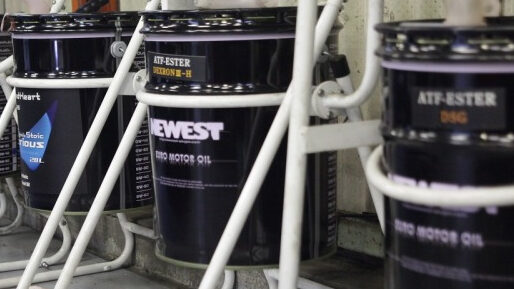
The first thing you’ll need is genuine VW G 052 182 (or equivalent) DSG oil.
Its capacity is approximately 6-6.5 liters.
This oil is completely different from regular automatic transmission fluid (ATF) because it both cools the clutch and controls the hydraulics of the mechatronics.
Even if you use aftermarket oil, be sure to choose a product that is clearly labeled “compatible with VW TL 52182.”
Filters and packings
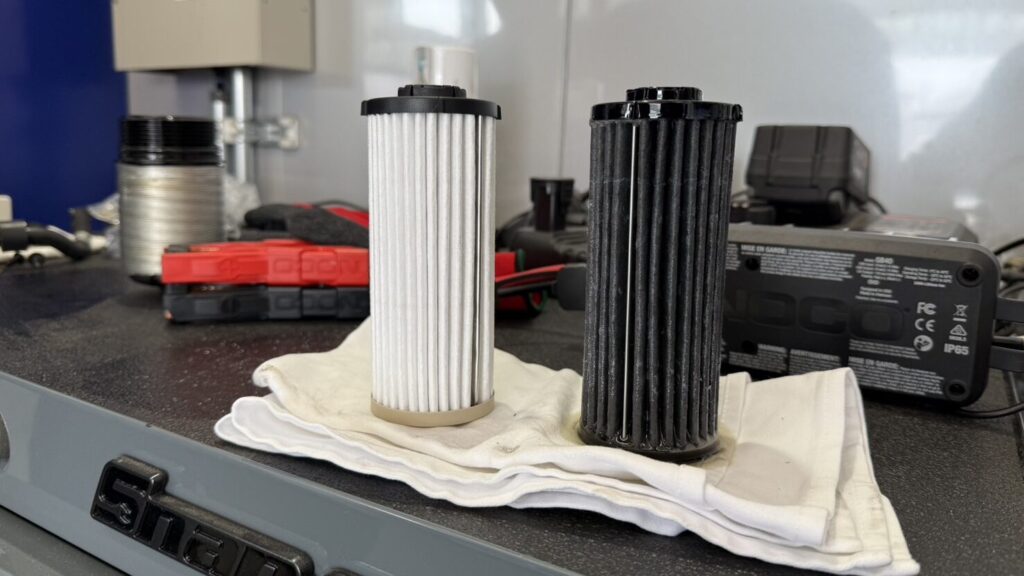
In a wet DSG, it is essential to change the filter at the same time as changing the oil .
The filter removes fine metal particles that accumulate in the oil line,
and if it is not changed, the oil will quickly become dirty even if new oil is added.
When replacing the filter, be sure to also replace the O-ring and drain washer
with new ones. O-rings vary in thickness, so if you are using aftermarket parts, be sure to check the size before installing them.
Dedicated filling attachment (filler)
The DQ381 is not designed to be poured from above, but rather gravity-filled from below .
This requires a special filling attachment (VW genuine or compatible aftermarket part).
By connecting this attachment to the drain port and pouring oil from a certain height,
you can fill the tank evenly without trapping air inside.
Diagnostic equipment (VCDS/VAS, etc.)
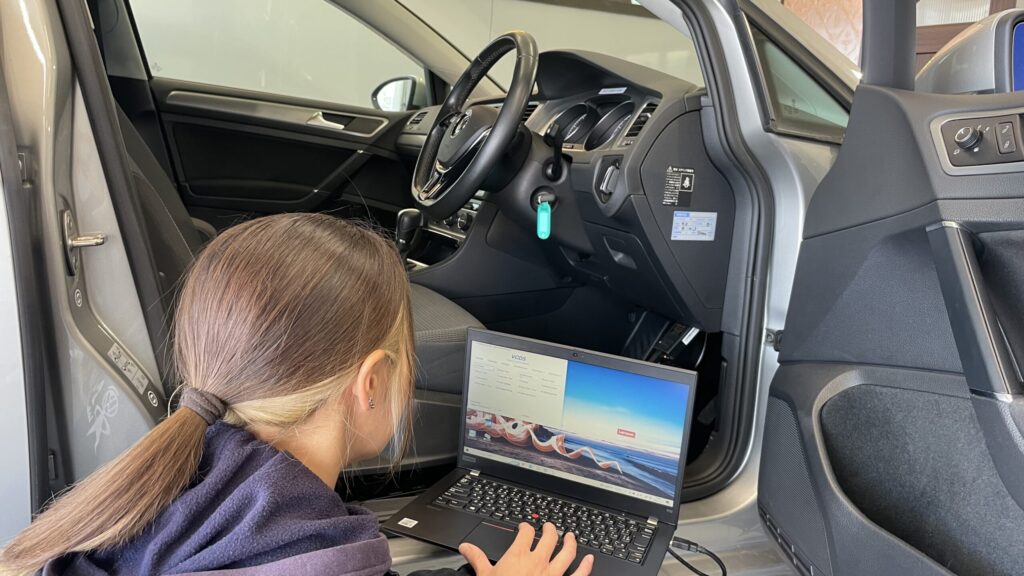
The most important thing when changing the oil in a wet DSG is to manage the oil temperature .
When adjusting the oil amount, if the oil temperature is outside the range of 35-45°C, the oil will not reach the correct level.
For this reason, we work while monitoring real-time temperatures using diagnostic tools such as VCDS and VAS
. Diagnostic machines are not just check tools, but are essential equipment that supports “oil temperature, oil pressure, and clutch learning.”
Other preparations
- 10N·m torque wrench
- Brake cleaner (for cleaning)
- Waste oil disposal box
- Heat-resistant gloves and safety glasses
The oil will be very hot during the work, so be sure to wear safety gear.
Having these will enable you to perform an accurate and repeatable DSG oil change.
A diagnostic machine is essential to check the fill volume and temperature.
Wet 7-speed DSG oil change procedure and temperature control
When changing the oil in a wet 7-speed DSG (DQ381), the key points are temperature control and a clean work environment, rather than the procedure itself.
In this chapter, we will introduce the actual oil change process step by step, and summarize the purpose of the work and points to note.
① Oil discharge (draining work)
First, lift the vehicle up horizontally, remove the drain bolt and drain the old oil .
Approximately 6 liters will drain.
If the oil temperature is high immediately after driving, allow it to cool for a while before starting work to prevent burns.
By checking the flow and smell immediately after opening the drain, you can determine the degree of deterioration and whether metal powder has been mixed in .
② Filter replacement (be careful not to place it sideways)
On the DQ381, the filter is attached to the side of the transmission case.
Remove the cover and be sure to replace the O-ring and gasket with new ones . When doing this, it’s important to only lightly wipe
the inside of the housing, as the initial lubrication will be lost if you completely degrease the inside of the housing .
If you use an aftermarket part, be sure to check the fit as there will be slight differences in the thickness and material of the O-ring.
③ Cleaning and assembly (torque management)
After installing the filter, tighten the housing evenly to around 10 N·m .
Uneven torque can cause the gasket to become uneven, resulting in oil seepage.
Clean the surrounding area with brake cleaner and wipe away any dirt or residual oil.
④ Oil filling (gravity type from below)
Next, use a special attachment to gravity-fill the oil from the bottom .
Inject approximately 6 to 6.5 liters, but this is just a temporary fill.
After filling, let it sit for a while to remove any air bubbles inside.
⑤ Oil amount adjustment and circulation operation
Start the engine and change the gear position in the following order for 10 seconds each: P → R → N → D → S.
This will allow the oil to circulate through all the channels.
After that, when the oil temperature reaches the range of 35 to 45°C, open the drain and drain out the excess oil.
When it starts to drip, it is the correct amount.
Finally, tighten the drain, check the underside, and the work is complete.
Managing this temperature range is the key to a wet DSG .
If the oil temperature is too high or too low, the correct level cannot be achieved, which affects the shifting feel.
We’ll go into more detail about why this is the case in the next chapter.
Key Points: Why Oil Temperature Management?
The most important thing when changing the oil in a wet 7-speed DSG (DQ381) is to keep the oil temperature within the range of 35 to 45°C and adjust the oil level .
If this temperature control is not maintained, not only will the replacement work be wasted, but it may also put a strain on the transmission.
Why is oil temperature so important?
DSG oil has the property that its volume changes significantly
depending on the temperature. It expands when the temperature rises and contracts when the temperature drops, so a reference temperature is always required when checking the oil level.
For the DQ381, this reference temperature is 35 to 45°C .
This corresponds to the “steady state” just before the engine and transmission enter normal operation.
If the level is adjusted when the temperature is lower than this, the oil
will expand during actual driving, resulting in excess oil (overfill).
Conversely, if the level is adjusted when the temperature is high, there will be a lack of oil when the vehicle cools , resulting in a lack of oil pressure and insufficient lubrication for the clutch and mechatronics.
Either of these can cause clutch wear and hydraulic system problems in the long term.
Real-time monitoring by VCDS is essential
Oil temperature cannot be measured by touching it from the outside, so it is monitored by connecting a diagnostic device (VCDS or VAS)
. The correct procedure is to select the “DSG Oil Temperature” option and adjust the drain while checking the value in real time.
The mechanic should open the drain when the temperature reaches around 41°C and
determine the oil level by checking that the oil drips at a steady rhythm.
What happens if the temperature changes?
- Overfilling : The oil expands, increasing pressure and causing seal and O-ring deterioration and leakage.
- Insufficient lubrication : The clutch and gears will not receive enough lubrication, increasing the risk of gear shift shock and seizure.
In other words, oil temperature management is not just a “check” task, but
the final checkpoint for ensuring the DSG operates properly .
If you thoroughly manage this temperature, the shifting feel will be much more stable after the oil change.
In the next chapter, we will look at how to determine the oil’s deterioration state and when it’s time to change it.
Even repair shops that usually focus on Japanese cars will be able to accept more European cars if they understand the procedures and precautions for servicing
them. If you’re preparing your shop to handle imported cars, check out Yolost, which offers a wide range of maintenance supplies and work environment items
. They stock items that are useful for any manufacturer’s vehicle, including wiring, batteries, and engine oil.
Many of their products are easy to use even for beginners, making them a great first step in DIY maintenance .
How to tell if your oil has deteriorated and what the oil change cycle is
Maintaining oil condition is of utmost importance when it comes to maintaining the performance of the wet 7-speed DSG (DQ381).
Because oil cools the clutch, lubricates the gears, and operates the mechatronics, deterioration of the oil can affect the operation of the entire transmission.
Here, we will explain the signs of oil deterioration and the approximate timing for oil change.
How to identify the deterioration state
| Deterioration stage | Appearance and smell characteristics | Car symptoms | Solution |
|---|---|---|---|
| Initial (normal) | Transparent to light brown, with little odor | Good feeling | Inspection only is OK |
| Mid-term (replacement period) | Dark brown, slight burnt odor | Increased gear shift shock/clutch noise | Oil and filter change recommended |
| Severe Deterioration | Black, contains metal powder, strong odor | Gear slippage/shift delays/temperature rise | Immediate replacement + condition inspection |
Wet DSG oil gradually deteriorates due to internal metal wear particles and heat.
When you pick it up and it no longer feels “smooth” and feels a little sticky, it’s time to change it.
Also, if the oil drained from the drain is dark brown or nearly black, the cooling performance and hydraulic stability have deteriorated.
Recommended replacement cycle
Manufacturers’ maintenance manuals recommend replacing the oil every 60,000 km, but
in actual maintenance situations , replacing the oil every 30,000 to 40,000 km is considered the best guideline for maintaining the most stable condition.
Deterioration tends to be accelerated especially in the following environments:
- Primarily city driving with lots of traffic jams and stop-and-go traffic
- Oil temperature is likely to rise when driving at high speeds or on long trips.
- Frequent circuit driving or sports driving
For cars used in this way, we recommend servicing every 30,000 km or once every two years .
Timing of deterioration check
During inspections and oil changes, checking the color and smell of the oil that comes out when the drain is opened will help you predict when the next change is due.
Also, gear shift shocks and a slight “stickiness” when starting are early signs of oil deterioration.
Rather than “repairing a wet DSG after it breaks down,” you can maintain its original smoothness by maintaining it before it deteriorates
. In the next chapter, we will introduce actual examples of common problems that can occur and how to deal with them.
What happens if oil is left to deteriorate?
The wet 7-speed DSG (DQ381) is designed so that the clutch, gears, and mechatronics are all connected by a single oil .
Therefore, if oil deterioration is left unchecked, it will gradually have a negative effect on the entire transmission.
The first thing that happens is “heat buildup” and hydraulic disturbances.
Deteriorated oil loses viscosity and its cooling performance also declines.
When the heat generated by the clutch cannot be effectively dissipated, the oil temperature rises and a “hot spot” forms inside the oil.
As a result, the oil pressure becomes unstable, causing a “short lag” or “shock” when shifting gears.
In many cases, changing the oil at this stage will resolve the issue, but if left untreated, the problem will progress to more serious problems.
Clogged filters and dirty oil passages
When oil becomes dirty, clutch wear particles and metal particles get mixed in, causing clogging of the filter and solenoid passages
. If the hydraulic passages are clogged, the clutch will delay shifting and gear engagement will become unstable.
If this condition continues, the hydraulic pump and mechatronic solenoid will work excessively, shortening the life of the internal parts.
If you go further, the mechatronics and clutch will break down.
If you continue driving while ignoring severe deterioration, the oil temperature will continue to rise, causing the oil to oxidize and foam. This
can cause the electronically controlled valve in the mechatronics to malfunction, leading to problems such as “the gear won’t engage” or “the car is stuck in N range.”
Furthermore, if the clutch plate burns due to insufficient lubrication, repairs will require replacing the mechatronics and clutch assembly, which can be quite expensive, costing between 200,000 and 400,000 yen .
Deterioration progresses quietly, so early replacement is essential.
The scary thing is that this deterioration progresses almost silently .
By the time obvious problems appear, there may already be internal damage.
By regularly replacing the oil every 30,000 to 40,000 km, you can significantly extend the life of your DSG.
The secret to keeping a wet DSG in good working order for a long time is to replace it when you think it’s still OK.
This is the best maintenance method to protect both the mechatronics and the clutch.
Estimated repair costs
The cost of oil changes and related repairs for the wet 7-speed DSG (DQ381) varies widely depending on the work involved.
Here we have compiled a rough guideline for three stages: regular oil changes, minor maintenance, and trouble repairs.
(All prices include tax, parts, and labor.)
Basic maintenance costs
| work item | Estimated cost (tax included) | Contents/Notes |
|---|---|---|
| DSG oil change (7-speed wet type) | Approximately 38,000 to 55,000 yen | Includes 6-6.5L of oil, filter change, and oil temperature adjustment |
| Filter replacement | Approximately 5,000 to 8,000 yen | Recommended to be performed when changing oil at the same time |
| VCDS Oil Temperature Monitoring + Learning Reset | Approximately 3,000 to 5,000 yen | Oil temperature monitoring and adaptation included |
| Drain and O-ring replacement | Approximately 1,000 to 2,000 yen | To prevent the reuse of packings |
A regular oil change will cost around 50,000 yen
. If you do it regularly, you won’t incur any other major expenses.
Repair costs after problems are left unattended
| Symptoms/Contents | Estimated cost (tax included) | Repair details/remarks |
|---|---|---|
| Oil leak repair (drain area/O-ring) | Approximately 10,000 to 15,000 yen | Cleaning, degreasing and resealing |
| Clutch slippage and gear shift shock repair | Approximately 100,000 to 180,000 yen | Clutch disassembly and worn parts replacement |
| Mechatronics unit replacement | Approximately 250,000 to 400,000 yen | Parts + programming included |
| DSG body overhaul | Approximately 400,000 to 600,000 yen | Mechatronics + clutch + gear inspection included |
If you neglect oil management, repair costs will skyrocket.
Mechatronics in particular are made up of precision parts, and
once damaged, they are difficult to reuse, and sometimes the only option is to replace them with new ones .
You can jump to an article that explains the costs and effects of each.
The benefits of hiring a specialist shop
Many VW specialty shops will diagnose deterioration trends when changing the oil,
allowing them to detect small leaks and temperature rises early on.
As a result, a change costing just a few tens of thousands of yen can prevent repairs costing hundreds of thousands of yen .
👉 Summary of maintenance and customization costs and work days at VW specialty store Nile Plus
Common problems and solutions
The wet 7-speed DSG (DQ381) is a highly reliable transmission, but
unexpected problems can occur due to oil deterioration or poor maintenance.
Here we have compiled a list of common symptoms seen in actual situations, as well as their causes and solutions.
List of common problems with wet 7-speed DSG
| Problem details | Main causes | Countermeasures and repair methods |
|---|---|---|
| Oil leaks and seepage | Reusing drain washer/Excessive tightening torque/Deteriorated O-ring | Replace with a new washer, degrease and clean, and tighten to the specified torque (approximately 45 N·m). |
| Shift shock/the “thud” that occurs when the gears engage | Oil deterioration, insufficient oil level, misalignment of clutch learning value | Oil change + VCDS adaptation (learning reset) |
| The oil temperature is high and the fan runs frequently. | Clogged filters, oil deterioration, dirty cooling lines | Filter change + oil line cleaning / cooling system inspection |
| Slowness and judder when starting | Decrease in oil viscosity, clutch wear, unstable hydraulic control | Early oil change + clutch operating pressure check |
| Error message “Gearbox abnormality” | Mechatronics Hydraulic system malfunction/sensor abnormality | Check oil pressure with a dedicated diagnostic machine → Repair mechatronics if necessary |
You can scroll
👉 Summary of drive and transmission problems | Repair costs and solutions for DSG, clutch, etc.
Click below to jump to articles about engine, drive, exhaust, and cooling system problems and repair costs.
Basic habits to prevent problems
Most of these problems are caused by poor oil management .
The inside of a wet DSG is very precise, and even the slightest dirt or viscosity change can affect the movement of the control valve.
There are three points you should check on a daily basis:
- When inspecting, check the undercarriage : Don’t overlook oil leaks or wetness in the drain area.
- Become sensitive to changes in gear shifting feel : A feeling of sticking or slipping when starting off is an early sign.
- Maintain regular replacement : It is recommended to replace the oil every 30,000 to 40,000 km, rather than the manufacturer’s standard of 60,000 km.
If you still feel uncomfortable
If slight shocks or shifting discrepancies remain after an oil change,
they can often be resolved by performing a clutch learning reset (adaptation) in the VCDS.
This is a procedure that readjusts the clutch wear and hydraulic characteristics to restore optimal control.
Because DSG is so precise, the best way to prevent problems is to “notice even small changes early.”
In the next chapter, we will summarize what we have covered so far and summarize the key points to keep the DSG running smoothly for a long time.
- DSG oil change | An easy-to-understand explanation of change timing and effects
- Cost and effectiveness of 7-speed wet DSG oil change
- Does a 7-speed dry DSG require no oil changes?
- Explaining the necessity of changing the oil in a 6-speed wet DSG while working
Wet DSG: “Oil management is everything”
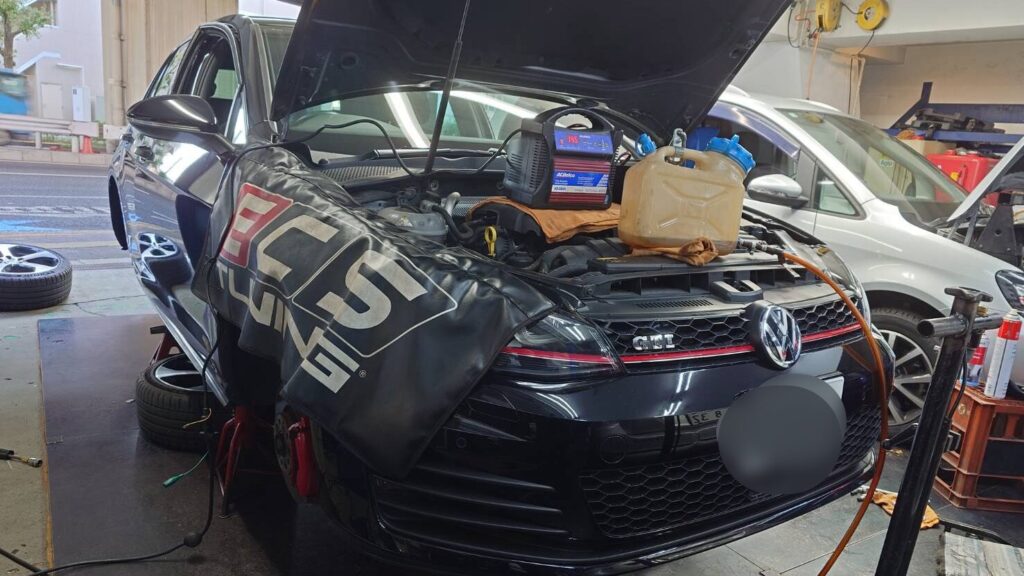
Volkswagen’s wet 7-speed DSG (DQ381) is a precision transmission that supports the driving performance of high-powered vehicles.
Its smooth shifting feel and durability depend as much on the condition of the oil as on the engine.
Oil cools the clutch, lubricates the gears, and transmits hydraulic pressure to the mechatronics – it’s like the “blood” of a DSG.
Therefore, regular oil changes and accurate oil temperature management are the key to extending the life of this system.
Let’s review the main points
- Recommended replacement cycle : 30,000-40,000 km or every 2 years (depending on driving conditions)
- Oil : VW genuine G 052 182 or equivalent (6-6.5L)
- Temperature control : Oil temperature level adjustment within the range of 35 to 45°C
- Filter change : Performed together with oil change
- Monitoring with a diagnostic device : Check the temperature and learning value using VCDS, etc.
By following these rules, you can prevent gear shift shock and clutch wear, and maintain a comfortable driving feel for a long time.
For a long and smooth ride
Wet DSGs are sometimes mistakenly thought of as being “easy to break,” but
in fact they have a very tough structure if properly maintained .
On the other hand, neglecting oil changes or working at the wrong temperature
can also lead to malfunctions.
If you experience any shocks or discomfort while shifting gears,
we recommend consulting a specialist workshop as soon as possible.
Taking a quick action is the best way to prevent expensive repairs such as mechatronic replacement.
Reference video: Nile Mecha Channel “Wet 7-speed DSG oil change remake”
Reference article: [7-speed wet DSG] DSG oil change performed on Golf 7.5R Variant
Frequently Asked Questions (FAQ)
Q1. Is it okay to leave a small amount of oil seeping?
A. Even if the surface is only slightly damp, it is a sign that the O-ring or gasket is deteriorating .
If left unattended, the internal oil pressure will decrease, which can cause shifting shock or gear slippage.
Cleaning and resealing at the leaking stage will ultimately reduce repair costs.
Q2. What is the difference between the 7-speed wet type and the 7-speed dry type (DQ200)?
A. The biggest difference is the structure of the clutch and the cooling method .
The DQ381 (wet type) has a clutch that is immersed in oil and is designed to stably withstand strong torque.
On the other hand, the DQ200 (dry type) does not use oil and is lightweight and fuel efficient, but it tends to be sensitive to heat.
Regular inspections are important for both, but with the wet type, oil management is the key to maintaining performance.
Q3. Can I change the oil myself?
A. It’s not impossible, but we don’t recommend it.
DSG oil level adjustment is required at an oil temperature between 35 and 45°C , so a diagnostic device (VCDS or VAS) is required.
If the temperature is not properly controlled, you may end up driving with an overfilled or underfilled oil, so
we recommend having the work done at a VW specialist shop or an import car repair shop.
Q4. Will changing the oil improve gear shift shock?
A. In many cases, it can be improved.
If the oil pressure is unstable due to deteriorated oil, simply changing the oil may make the shift feel smoother
. However, if there is already clutch wear or a mechatronic malfunction, a learning reset (adaptation) or inspection is required.
Q5. What should I check after replacement?
A. Check for oil leaks, shocks when shifting gears, and unusual noises when idling.
Immediately after changing the oil, shifting may feel a little stiff until the oil settles in, but this
should usually stabilize after driving a few dozen kilometers. It’s also a good idea to record
the next oil change date, which will be 30,000 to 40,000 km or two years from now .
Note:
This article is a general guide based on the maintenance structure of a wet-type 7-speed DSG (DQ381).
The actual work requires a diagnostic machine, special filling tools, and temperature-controlled equipment.
DIY work can be dangerous, so we recommend having it done at a VW specialist shop or authorized workshop.
We also recommend these articles:
- Volkswagen Abnormal Noise Diagnostic Guide | Causes, Repair Costs, and Urgency
- Summary of causes of poor running performance | Check points when your car won’t move forward, is unstable, or vibrates
- A comprehensive guide to VW suspension problems, repairs, and maintenance | Basics of bushings, suspension, bearings, and alignment, and symptom-specific checks
▼List of individual articles on DSG repair and maintenance▼
Details of defects by vehicle type
Even if the “way” of the malfunction is similar, “which model has the most common problems” differs slightly depending on the model.
The following page summarizes the trends by model and common malfunction cases among other owners.
This is a guide to keeping your DSG (dual clutch) in good condition for as long as possible.
First, understand how it works, then check out preventative maintenance, then repair options and costs.
👉Nile Mecha Channel Playlist: 7-Speed Dry DSG Mechatronics Special



コメント