


Before reading this content, it will be helpful to check the basic knowledge of DSG to deepen your understanding.
👉 DSG Transmission Basics
How Ignition System Maintenance Can Reduce Low-Speed Vibration
Judder during take-off or low-speed driving is one of the most common complaints among Volkswagen and Audi vehicles equipped with the 7-speed dry DSG (DQ200).
Many drivers are told that this rattling or shuddering sensation is caused by clutch wear, and that clutch replacement is the only solution. However, real-world diagnostic experience shows that this assumption is often incomplete.
In a significant number of cases, DSG judder is triggered not by the clutch itself, but by instability in the engine’s ignition system, such as worn spark plugs or aging ignition coils. When combustion becomes uneven, engine torque fluctuates, and the DSG reacts by repeatedly adjusting clutch engagement—resulting in vibration that feels like a transmission fault.
In this article, we explain:
- What DSG judder really is
- Why the dry 7-speed DSG (DQ200) is especially sensitive
- How ignition system problems can mimic clutch failure
- When ignition system maintenance can improve or eliminate judder
Before committing to expensive transmission repairs, it is essential to understand how engine combustion and DSG clutch control work together. Checking the ignition system first may save both time and cost.
Reference video: Nile Mecha Channel “Improving Judder in 7-Speed DSG and Verifying the Ignition System” Video
Reference article: Judder Countermeasures! The Cause Is Not a Dry 7-Speed DSG, but XX!
▼Nile Mecha Channel Technical Article Navigation▼
DSG Special Feature
Suspension Special Feature
Engine Special Feature
👉Check out:Nile Mecha Channel (youtube)
Related articles:DSG/Transmission
- Explained: The 6-Speed Wet DSG (DQ250)
- Won’t Move in D Range: Causes of 7-Speed Dry DSG (DQ200) Failure and What to Do
- Does the 7-Speed Dry DSG (DQ200) Need an Oil Change? Costs, Procedure, and Facts
- DQ200 Dry DSG Clutch Guide: Design, Replacement Cost, Judder Symptoms, and Longevity Tips
- Is DSG Judder in the 7-Speed Dry DSG (DQ200) Really Just a Clutch Problem?
- A Complete Guide to the 7-Speed Dry DSG Mechatronics
- Inside the Shop: Rebuilding DSG Mechatronics
- DQ381 Wet DSG Oil Change Guide: When to Service, Cost, Time, and Filter Replacement
- DSG Mechatronics Oil Leak: Causes, Repair Costs, and O-Ring & Gasket Replacement Tips
- What Is DSG Judder? Understanding the Low-Speed Vibration Unique to the 7-Speed Dry DSG (DQ200)
- Common Causes of DSG Judder
- Why Ignition System Problems Can Cause DSG Judder
- When Ignition System Refresh Can Improve DSG Judder
- Spark Plug and Ignition Coil Inspection Points
- Important Considerations When Replacing Spark Plugs
- What Changes After Replacing the Ignition System
- Cost Estimates for Spark Plug and Ignition Coil Replacement




What Is DSG Judder? Understanding the Low-Speed Vibration Unique to the 7-Speed Dry DSG (DQ200)
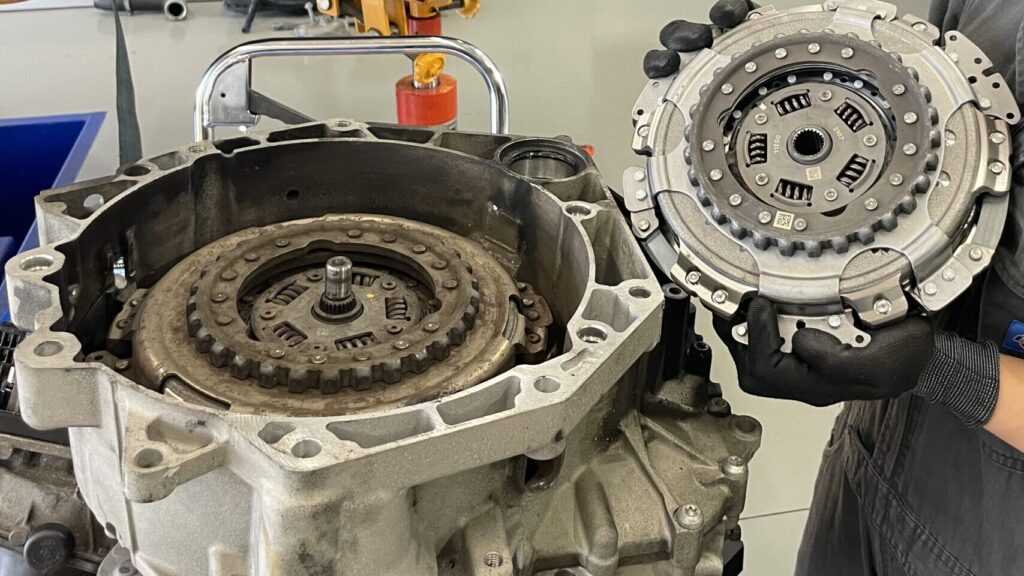
A rattling or shuddering sensation at low speeds
If you drive a Volkswagen or Audi equipped with the 7-speed dry DSG (DQ200), you may have noticed a subtle but unpleasant vibration when pulling away from a stop or creeping along in traffic.
This phenomenon is commonly referred to as DSG judder.
Judder typically occurs at moments when clutch control is most delicate: light throttle input when starting off, slow-speed maneuvering, or just before the vehicle comes to a complete stop. Instead of a smooth engagement, the car may feel as though it is lightly shaking or trembling through the body and steering wheel.
At first, the sensation can be mild and easy to ignore. However, judder is rarely something that improves on its own.
How judder progresses over time
When left unaddressed, DSG judder often becomes more noticeable and more frequent. Drivers may begin to experience symptoms such as:
- A sudden thump or jolt when starting from a stop
- Knocking or shuddering sensations during stop-and-go traffic
- Unstable or fluctuating engine speed
- Jerky behavior just before the vehicle comes to rest
Beyond driving discomfort, these symptoms place additional stress on both the clutch assembly and the transmission control system, potentially accelerating wear and increasing long-term repair costs.
Why the dry 7-speed DSG (DQ200) is particularly prone to judder
Judder is a well-known characteristic of the dry-type 7-speed DSG (DQ200) and is far less common in the wet-type 6-speed DSG (DQ250) used in other VW Group vehicles.
The primary reason lies in the clutch design.
Dry clutches are not immersed in oil, which means they receive less cooling and lubrication than wet clutches. As a result, they are more sensitive to heat buildup, friction changes, and wear.
Under these conditions, even small variations in clutch engagement can disrupt smooth take-off behavior. Minor inconsistencies that might go unnoticed in a wet DSG can easily translate into vibration in a dry DSG.
Is the clutch really the only cause?
Judder is often immediately attributed to clutch wear, and while the clutch is certainly a major factor, this assumption can be misleading.
In practice, many cases of judder involve multiple interacting elements, including engine combustion quality and electronic control timing. There are even reports from repair shops where clutch replacement alone failed to completely resolve the issue.
This is because DSG judder does not originate solely within the transmission.
It frequently arises from a mismatch between engine output behavior and DSG clutch control. When the engine and transmission are not operating in harmony, vibration can occur even if the clutch itself is still within acceptable limits.
Judder as a system-level symptom
Rather than a single-point failure, DSG judder should be understood as a system-level symptom. It reflects the complex relationship between the engine, transmission control logic, and operating environment.
In other words, judder is not always “a worn clutch problem.”
It can be the result of subtle irregularities across the drivetrain, especially in vehicles where engine smoothness is no longer optimal.
In the next chapter, we will break down the most common causes of DSG judder, categorizing them clearly and explaining how each factor contributes to this frustrating low-speed vibration.ly referred to.
Common Causes of DSG Judder
Why judder is rarely caused by a single issue
DSG judder is often explained simply as “clutch slip,” but in reality, it is usually the result of multiple overlapping factors rather than a single fault.
The 7-speed dry DSG (DQ200) relies on extremely precise electronic control during take-off and low-speed driving. Because of this sensitivity, even small irregularities anywhere in the drivetrain system can appear as vibration or shudder.
Broadly speaking, the causes of DSG judder can be grouped into four categories:
- Mechanical factors
- Software-related factors
- Environmental conditions
- Ignition system-related factors
Understanding how each of these contributes helps avoid unnecessary repairs and misdiagnosis.
Mechanical factors: clutch wear and hydraulic control irregularities
The most commonly cited cause of DSG judder is clutch wear or instability in hydraulic control.
The dry DSG uses two separate clutch plates that alternate engagement for odd and even gears. Over time, heat and friction can cause minor wear or surface distortion. Even subtle changes in clutch thickness or flatness can result in uneven engagement, especially at low speeds.
In addition, the mechatronics unit, which hydraulically controls clutch operation, can develop pressure fluctuations. When hydraulic pressure does not rise and fall smoothly, the clutch may repeatedly engage and disengage at partial load, producing vibration.
Software-related factors: learned value imbalance
DSG systems continuously adapt to driving style and operating conditions. This process, known as clutch learning or adaptation, adjusts engagement timing based on throttle input, load, and temperature.
However, when these learned values become biased or inconsistent, clutch control can drift away from its ideal state. As a result, engagement timing may become slightly off, leading to jerky starts or uneven low-speed behavior.
In some cases, dealerships or specialist workshops can improve judder by performing a reset and relearning procedure, allowing the DSG to recalibrate clutch behavior under proper conditions.
Environmental factors: heat, humidity, and stop-and-go driving
Judder is also influenced by the operating environment.
Because dry clutches are not oil-cooled, they are particularly vulnerable to high temperatures. During summer traffic congestion, clutch temperature can rise significantly, altering friction characteristics and making smooth engagement more difficult.
Conversely, in colder climates, changes in material clearances can affect clutch response, sometimes resulting in sluggish or uneven take-off behavior.
In short, judder is not caused solely by mechanical wear. Temperature, humidity, and driving conditions all play a meaningful role.
Ignition system factors: uneven engine combustion
One frequently overlooked cause of DSG judder lies not in the transmission, but in the engine ignition system.
When spark plugs or ignition coils deteriorate, combustion can become uneven between cylinders. This leads to momentary fluctuations in engine torque. The DSG control unit interprets these torque changes and adjusts clutch engagement accordingly.
If torque delivery is inconsistent, the clutch may repeatedly compensate, resulting in vibration or shudder. In these cases, the clutch itself may be functioning correctly, but the input signal from the engine is unstable.
This ignition-related mechanism is a key “non-clutch” cause of DSG judder and will be explained in detail in the next chapter.
In summary, DSG judder should be viewed as the outcome of interacting mechanical, electronic, environmental, and combustion-related factors. Focusing on the clutch alone can lead to unnecessary repairs while the root cause remains unresolved.
Next, we will take a closer look at why ignition system issues have such a strong impact on the 7-speed dry DSG, and how stabilizing combustion can dramatically improve drivability.
Why Ignition System Problems Can Cause DSG Judder
How engine combustion directly affects clutch control in the DQ200
How the 7-speed dry DSG (DQ200) works with the engine
The Direct Shift Gearbox (DSG) is designed to deliver seamless gear changes by transmitting engine torque to the drivetrain with minimal interruption.
In the case of the 7-speed dry DSG (DQ200), this is achieved through a dual-clutch system that independently controls odd and even gears. Clutch engagement and disengagement are managed electronically, based on precise calculations of engine speed and torque output.
This means that DSG operation is not independent of the engine.
On the contrary, stable engine combustion is a prerequisite for smooth DSG control.
How misfires disrupt DSG clutch control
When components in the ignition system, such as spark plugs or ignition coils, begin to deteriorate, combustion may become unstable. In some moments, the spark may weaken or fail to ignite the air-fuel mixture completely, causing a brief misfire.
At that instant, engine torque drops unexpectedly. The DSG control unit interprets this sudden torque fluctuation as a potential clutch slip and reacts by adjusting clutch pressure.
This reaction can trigger unnecessary clutch opening and closing, resulting in the characteristic shudder or rattling sensation felt during take-off or low-speed driving.
From the driver’s perspective, this feels like a transmission problem.
In reality, the root cause may be irregular combustion inside the engine.
Why the dry DSG is especially sensitive to torque fluctuations
Unlike wet DSG systems, the dry DQ200 clutch does not benefit from oil damping. As a result, even small changes in engine torque are transmitted directly to the clutch plates.
This sensitivity explains why:
- Slight engine roughness is noticeable at idle
- Minor combustion irregularities translate into vibration when starting
- Judder appears even though no fault codes may be stored
If engine output is smooth and consistent, clutch engagement remains stable.
If combustion becomes uneven, DSG control logic struggles to maintain smooth engagement.
“False clutch judder” even when the clutch is healthy
At many repair shops, there are cases where judder persists even after clutch replacement. In these situations, the clutch itself is not defective.
More often than not, the real issue lies with reduced ignition stability, especially in vehicles that have accumulated mileage or have not had spark plugs and coils replaced for a long time.
This leads to what can be described as “false clutch judder”: a vibration that feels like a worn clutch, but is actually caused by inconsistent engine torque delivery.
For DSG-equipped vehicles, it is critical to evaluate the engine and transmission as a single system, rather than diagnosing them in isolation.
In short, DSG judder is not always a mechanical clutch failure.
In many cases, it is a symptom of combustion instability that disrupts the delicate balance between engine output and clutch control.
In the next chapter, we will examine real-world cases where refreshing the ignition system alone significantly reduced or eliminated DSG judder, and how to determine whether this approach is appropriate for your vehicle.
When Ignition System Refresh Can Improve DSG Judder
How to tell whether the ignition system is part of the problem
Judder does not always mean “clutch replacement”
When drivers hear the word DSG judder, many immediately assume that clutch replacement is unavoidable. However, in real-world maintenance scenarios, refreshing the ignition system alone often leads to noticeable improvement, especially when judder is still mild.
The key is identifying whether the symptoms point toward engine combustion instability rather than mechanical clutch failure.
Typical symptoms suggesting ignition system involvement
Ignition-related judder tends to appear under specific conditions. The following symptoms are commonly reported when spark plugs or ignition coils are deteriorating:
- Shudder or vibration occurs mainly when starting or creeping at low speed
- Engine speed fluctuates slightly at idle
- The engine feels rough or uneven while stopped
- There is a brief hesitation or loss of power during light acceleration
These symptoms are closely linked to uneven combustion, not clutch wear. In many cases, spark plug wear or aging ignition coils are the underlying cause.
Estimating the cause based on driving behavior
Judder characteristics provide valuable clues. The table below summarizes how likely the ignition system is involved based on symptom patterns:
| Driving condition | Likelihood of ignition involvement | Improvement potential |
|---|---|---|
| Judder only during start-off or low-speed driving | High | ◎ |
| Unstable idle or slight engine shake | High | ◎ |
| Vibration at medium to high speeds | Low (more clutch-related) | △ |
| Knocking sensation that increases with engine speed | Medium | ○ |
In short, judder that appears mainly at idle or during take-off strongly suggests an ignition-related issue and is well worth investigating.
Real-world improvements after ignition system replacement
Many owners report immediate and noticeable changes after replacing worn spark plugs or ignition coils:
- Smoother and quieter idle
- Reduced or eliminated judder when starting
- Improved throttle response
- More stable fuel economy
- Reduced shift shock from the DSG
These improvements occur because engine torque delivery becomes more consistent, allowing the DSG to control clutch engagement without constant correction.
In dry 7-speed DSG vehicles, this effect is particularly pronounced. There are numerous cases where drivers report that judder disappeared entirely without touching the clutch.
Why ignition refresh should be the first step
If judder is severe and constant, clutch repair may eventually be unavoidable. However, when symptoms are limited to slight vibration during start-off or unstable idle, addressing the ignition system first is a practical and cost-effective approach.
Spark plugs and ignition coils are consumable components. Simply replacing them:
- Stabilizes engine combustion
- Reduces torque fluctuation
- Improves DSG clutch control
Many drivers describe the result as “small but persistent discomforts finally disappearing.”
Three realistic options for VW owners
When facing DSG judder, Volkswagen owners typically have three sensible paths to choose from:
1. Accurate diagnosis before committing to repairs
A specialist in imported vehicles can pinpoint the true cause and propose only the necessary work, avoiding unnecessary clutch replacement.
2. Professional evaluation of vehicle condition and history
For vehicles with unknown maintenance history or aftermarket parts, a professional assessment can clarify risks before costly repairs.
3. Eliminating repair risk with a fixed-cost ownership option
Choosing a monthly flat-rate plan that includes inspections, taxes, and maintenance can remove the stress of unexpected DSG-related failures.
A practical reminder
Judder that feels “manageable for now” often indicates an issue that will worsen over time. Addressing ignition system problems early can significantly reduce future repair costs and drivetrain damage.
If you notice even mild hesitation or vibration, acting sooner rather than later is almost always the more economical choice.
Spark Plug and Ignition Coil Inspection Points
How aging ignition components reveal themselves
Ignition system deterioration is often subtle
The most reliable way to evaluate the condition of the ignition system is by inspecting spark plugs and ignition coils. Both are consumable components, and as they age, spark strength gradually weakens.
When ignition energy becomes inconsistent, combustion quality declines, leading to torque fluctuation. In DSG-equipped vehicles, this instability is transmitted directly to clutch control, making ignition-related problems show up quickly as judder or knocking sensations.
Spark plug inspection points
Spark plugs are often described as the “heart of the engine,” as they ignite the air–fuel mixture inside the combustion chamber. If any of the following conditions are observed, replacement should be considered:
- Rounded or worn electrode edges
- Excessively widened plug gap
- Heavy carbon buildup causing black discoloration
- White or blistered appearance indicating excessive combustion temperature
As a general guideline, spark plugs should be replaced every 50,000–60,000 km (30,000–37,000 miles). Even long-life iridium plugs are not immune to age-related performance decline.
Continuing to drive simply because “the car still runs” often allows small combustion irregularities to develop into drivability issues. Preventive replacement provides peace of mind and protects the drivetrain.
Ignition coil inspection points
Ignition coils convert low battery voltage into the high voltage required to fire the spark plugs. While damage is not always visible externally, internal resistance increases over time, weakening ignition output.
When inspecting ignition coils, pay attention to the following:
- Cracked connector tabs or poor electrical contact
- Cracks, swelling, or oil contamination in rubber boots
- Uneven ignition output detected via OBD misfire counters
Volkswagen and Audi vehicles commonly experience ignition coil degradation after 5–7 years or around 50,000 km. Even without obvious failure, symptoms such as heavy acceleration feel or increased vibration can indicate early-stage deterioration.
Why plugs and coils should be replaced together
Spark plugs and ignition coils operate as a matched system. Replacing only one component while leaving the other worn often fails to restore ignition stability.
For this reason, simultaneous replacement is strongly recommended.
This approach is especially effective for vehicles approaching or exceeding 100,000 km, where refreshing both components can dramatically restore smooth starting behavior and quiet idle quality.
Recommended spark plug and ignition coil brands
Choosing reliable, OEM-equivalent parts is critical for DSG vehicles, which are highly sensitive to torque fluctuations.
| Manufacturer | Characteristics | Notes |
|---|---|---|
| NGK | Widely used as OEM, highly stable ignition output | Iridium IX / Laser Iridium recommended |
| BOSCH | Optimized for European vehicles, stable resistance | FR7KPP33U and similar |
| DENSO | Good cost-performance balance | IXEH20TT and similar |
Selecting parts solely based on price is not recommended. Compatibility with engine control systems is just as important as durability.
Key points when selecting ignition coils
Even coils that appear identical can differ in resistance values, connector shape, and ignition characteristics. Always verify compatibility using the OEM part number and choose coils from trusted manufacturers such as BOSCH, BERU, or NGK.
Low-cost, no-name products carry a higher risk of uneven output or early failure, which can lead to repeated repairs and higher long-term costs.
Installation precautions
When replacing spark plugs, apply a thin layer of anti-seize grease to the threads and tighten to the specified torque (typically around 25 Nm) using a torque wrench.
- Over-tightening can damage threads or crack the plug
- Under-tightening can cause loosening, compression leaks, and misfires
Professional workshops carefully manage torque and heat conditions. If there is any uncertainty about DIY work, professional installation is strongly recommended.
Important Considerations When Replacing Spark Plugs
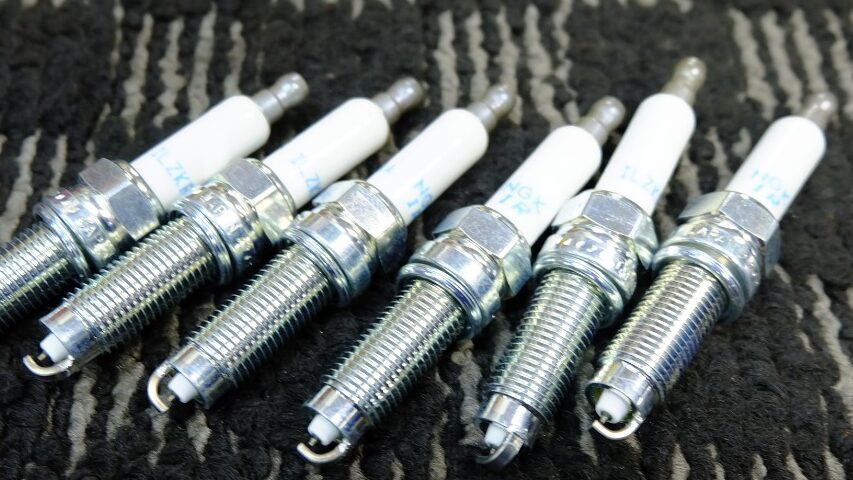
DIY or professional service: choosing the safer option
Spark plug replacement looks simple—but often isn’t
At first glance, spark plug replacement appears to be a straightforward maintenance task. In practice, however, it can be more time-consuming and delicate than expected, especially on Volkswagen engines.
Access often requires removal of the engine cover and careful handling of wiring and ignition coils. On many VW models, the spark plugs sit deep within the cylinder head, leaving little room for error when inserting tools.
Incorrect tool angle or excessive force can easily damage connectors or threads.
Ignition coil connector damage is a common DIY issue
One of the most frequent problems during DIY work is breaking the ignition coil connector tabs. Over time, the plastic becomes brittle due to heat exposure.
Forcing the connector off without releasing the locking tab can result in permanent damage. A pick tool should be used to gently release the lock before removal.
Once a connector is broken, even a simple spark plug job can escalate into a costly repair.
Torque management is critical
The single most important factor when installing spark plugs is correct tightening torque. For most VW engines, the standard specification is approximately 25 Nm.
Relying on “feel” rather than a torque wrench can lead to serious problems:
- Over-tightening may strip threads or crack the spark plug
- Under-tightening can cause loosening, compression leaks, and misfires
Always install spark plugs using a torque wrench, tightening them smoothly and evenly. Applying a very thin layer of anti-seize grease to the threads helps prevent seizing and simplifies future removal.
Required tools and estimated labor time
To replace spark plugs properly, the following tools are typically required:
- Spark plug socket (14 mm or 16 mm, depending on model)
- Extension bar
- Ratchet handle
- Torque wrench
- Pick tool (for electrical connectors)
Even for experienced technicians, the job usually takes 1 to 1.5 hours. Work should always be performed with the engine fully cooled, as hot cylinder head threads are easily damaged.
Key precautions for DIY work
If you choose to perform the work yourself, keep these points in mind:
- Photograph wiring and hose routing before disassembly
- Clean spark plug wells with compressed air to prevent debris from entering the cylinder
- Remove and install ignition coils vertically without twisting
- After reassembly, check for fault codes using an OBD scanner
Following these steps can reduce the risk of mistakes, but does not eliminate it entirely.
When professional service is the better choice
If you lack the necessary tools, are uncertain about torque control, or are concerned about damaging connectors, professional service is the safer option.
VW specialists follow proper procedures, use correct torque values, and can verify ignition performance through diagnostic equipment. Many workshops also confirm misfire history and ensure proper system adaptation after replacement.
In the long run, professional installation often proves more cost-effective, as it minimizes the risk of repeat repairs and secondary damage.
What Changes After Replacing the Ignition System
How improved combustion transforms the driving experience
A noticeably quieter and smoother engine
The first change most drivers notice after replacing spark plugs or ignition coils is how much smoother the engine feels at idle.
Before replacement, the engine may have exhibited subtle vibration or unevenness while stopped. After refreshing the ignition system, idle speed stabilizes, and the engine runs quietly and evenly, often feeling closer to its original factory condition.
This happens because combustion becomes more uniform across all cylinders. With fewer torque fluctuations, vibrations transmitted to the steering wheel, seats, and cabin are significantly reduced.
For the 7-speed dry DSG (DQ200), which reacts to even the smallest changes in engine speed, this improvement in engine stability directly enhances transmission behavior.
Judder during take-off may disappear
One of the most dramatic improvements is often felt when starting from a stop.
The DSG mechatronics unit continuously monitors engine torque to determine how the clutch should engage. When ignition becomes stable, torque signals smooth out, allowing the clutch to engage without hesitation or repeated correction.
As a result:
- The “brrr” or rattling sensation during take-off may vanish
- Low-speed creeping becomes smoother
- Stop-and-go traffic feels far less stressful
In many real-world cases, workshops report that judder was resolved entirely without clutch replacement, simply by refreshing the ignition system.
Improved throttle response and fuel efficiency
New spark plugs and ignition coils improve combustion efficiency, which translates into cleaner and more immediate throttle response.
Acceleration becomes more linear, requiring less pedal input to achieve the same result. With fewer misfires and less wasted fuel, many drivers observe a fuel economy improvement of 1–2 km/L (2–5 mpg equivalent).
In addition, smoother torque delivery reduces hesitation during DSG shifts, improving ride comfort during city driving.
A noticeable improvement in overall comfort
Beyond measurable performance gains, many drivers describe a broader improvement in driving comfort:
- Quiet, stable idling
- Smooth, confident take-off
- Effortless, predictable acceleration
These changes restore the vehicle’s inherent refinement. Especially in higher-mileage DSG-equipped cars, drivers often remark that the car finally “feels right again” after ignition system replacement.
In this sense, ignition maintenance is not merely consumable replacement. It functions as a health reset for the drivetrain, ensuring the engine and transmission operate in harmony.
In the next chapter, we will look at realistic cost expectations for spark plug and ignition coil replacement, and explain why this maintenance is considered a minor but highly effective investment.
Cost Estimates for Spark Plug and Ignition Coil Replacement
Why ignition system maintenance is a high-value, low-risk repair
Ignition system service is considered minor maintenance
Replacing spark plugs and ignition coils does not require disassembling the engine or transmission. For this reason, it is classified as minor maintenance, even though it can deliver major improvements in drivability.
That said, because multiple components must be accessed from the top of the engine and proper torque control is essential, labor costs are not negligible. Below is a general cost guideline based on a typical Volkswagen four-cylinder engine.
Typical cost breakdown
| Service | Estimated cost (tax included) | Notes |
|---|---|---|
| Spark plug replacement | ¥12,000–¥20,000 | Four-cylinder engines |
| Ignition coil replacement | ¥25,000–¥40,000 | Replacing all coils |
| Plugs + coils together | ¥35,000–¥50,000 | Labor included |
These figures include both parts and labor and may vary depending on engine layout and vehicle model.
Spark plug replacement costs explained
Spark plugs themselves typically cost ¥2,000–¥3,000 per plug. Because wear tends to occur evenly, replacing all four at the same time is recommended.
High-performance plugs such as iridium types raise parts cost slightly but offer longer service intervals and improved ignition stability.
Since the process involves removing the engine cover and ignition coils, professional installation is often the safer option, particularly for DSG-equipped vehicles where ignition stability directly affects transmission behavior.
Ignition coil replacement costs explained
Ignition coils generally cost ¥5,000–¥8,000 each. While it is technically possible to replace a single failed coil, simultaneous replacement is strongly recommended.
Coils tend to degrade at similar rates, and replacing only one often leads to repeated failures. After full replacement, drivers typically notice reduced torque fluctuation and a lighter, smoother engine feel.
Why replacing plugs and coils together saves money
Replacing spark plugs and ignition coils at the same time maximizes the benefit of ignition system refresh. Labor overlap often makes combined replacement less expensive than performing each service separately.
Considering the potential benefits—reduced judder, improved fuel economy, quieter operation, and smoother DSG behavior—this maintenance offers excellent value for money.
The advantage of specialist workshops
Volkswagen specialists and experienced imported-car repair shops are familiar with:
- Model-specific spark plug types
- Correct tightening torque
- Ignition coil resistance characteristics
They also use diagnostic equipment to check misfire history and may perform adaptation resets after replacement, restoring optimal ignition conditions immediately.
Rather than focusing solely on parts cost, prioritizing overall reliability and peace of mind often leads to better long-term results.
In the next section, we will summarize the key takeaways and explain why early ignition system maintenance is one of the most effective ways to address DSG judder before it escalates into a major repair.mind.
👉 Summary of drive and transmission problems | Repair costs and solutions for DSG, clutch, etc.
Click below to jump to articles about engine, drive, exhaust, and cooling system problems and repair costs.
Note:
This article summarizes general maintenance knowledge regarding shudder symptoms in 7-speed dry DSGs.
Actual diagnosis and replacement work requires specialized knowledge and tools.
If you notice any abnormalities, be sure to consult a VW/Audi specialist workshop.




コメント