

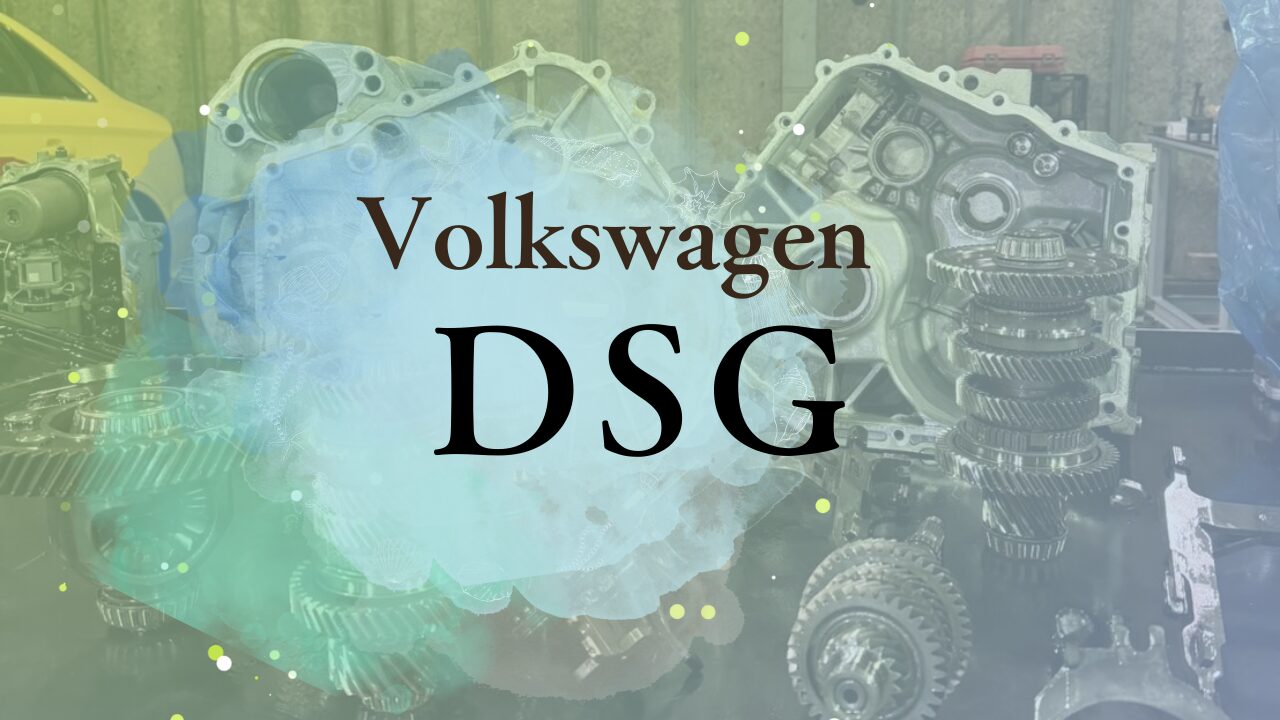
This page provides basic information about Volkswagen’s DSG.
One of the things that makes Volkswagen (VW) cars so fun to drive is
their DSG (Direct-Shift Gearbox), a twin-clutch transmission .
- Direct feeling of MT (manual)
- The ease of an automatic transmission
The DSG combines the best of both worlds, but because its structure is so precise, it can easily develop into problems if
aging, lack of maintenance, and wear on parts occur.
If you can address any minor issues while they are still minor,
you are more likely to be able to significantly reduce repair costs and damage.
In this article,
- Basic structure of DSG (dry/wet)
- Common symptoms of illness
- Main causes of failure and the risk of neglect
- Estimated repair and maintenance costs
- Daily prevention and check methods
We will organize and explain the above in an easy-to-understand manner, even for first-time users.
DSG Special Feature | Nile Mecha Channel Reference Article Navigation
Related articles:DSG/Transmission
- Explained: The 6-Speed Wet DSG (DQ250)
- Won’t Move in D Range: Causes of 7-Speed Dry DSG (DQ200) Failure and What to Do
- Does the 7-Speed Dry DSG (DQ200) Need an Oil Change? Costs, Procedure, and Facts
- DQ200 Dry DSG Clutch Guide: Design, Replacement Cost, Judder Symptoms, and Longevity Tips
- Is DSG Judder in the 7-Speed Dry DSG (DQ200) Really Just a Clutch Problem?
- A Complete Guide to the 7-Speed Dry DSG Mechatronics
- Inside the Shop: Rebuilding DSG Mechatronics
- DQ381 Wet DSG Oil Change Guide: When to Service, Cost, Time, and Filter Replacement
- DSG Mechatronics Oil Leak: Causes, Repair Costs, and O-Ring & Gasket Replacement Tips
- What is DSG?
- Common symptoms of DSG malfunction
- Main causes of DSG malfunction
- What happens if you leave the condition untreated?
- Estimated repair and replacement costs
- Daily inspection and prevention methods
- Don’t ignore any discomfort and deal with it promptly
- Frequently Asked Questions (FAQ)
- We also recommend these articles:




What is DSG?
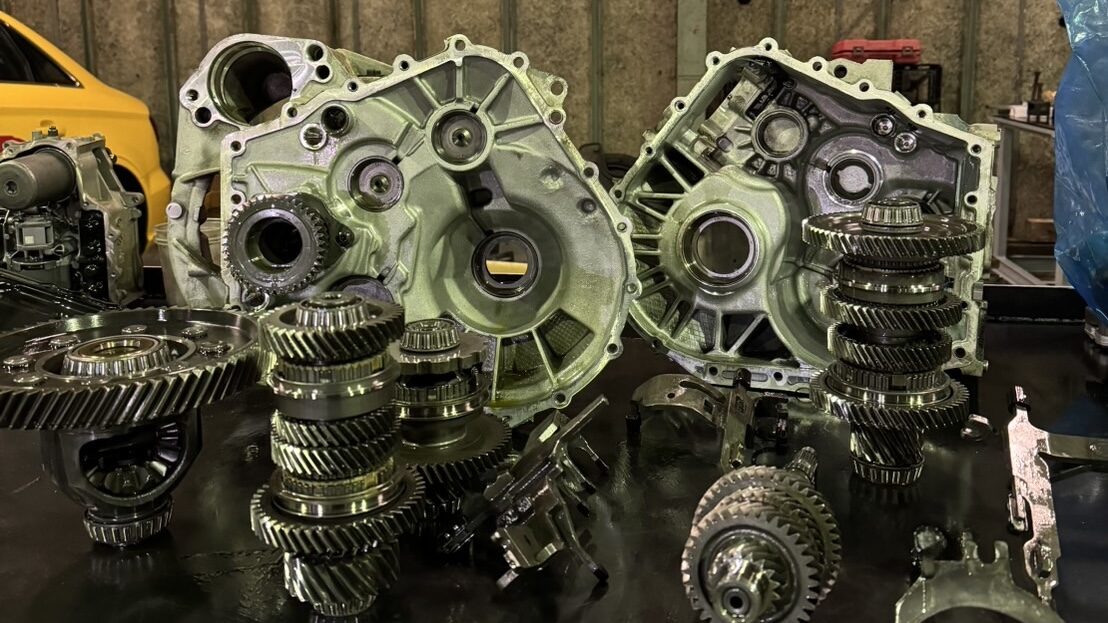
Basic structure of DSG
DSG is a transmission that uses two clutches to alternate between odd-numbered gears (1st, 3rd, and 5th gears) and even-numbered gears (2nd, 4th, 6th, and 7th gears) .
- One clutch: 1st, 3rd, 5th gear (plus 7th gear, etc.)
- Another clutch: 2nd, 4th, 6th speed
A major feature of this system is that the next gear is prepared in advance, and then shifting gears can be done instantly
by simply switching the clutch .
At VW, mainly,
- 6-speed wet DSG (DQ250)
- 7-speed dry DSG (DQ200)
are used depending on the vehicle model and engine.
Benefits of DSG
- Uninterrupted acceleration and excellent fuel efficiency
- Easy like an automatic transmission
- Direct feeling similar to manual transmission
On the other hand, because of its complex structure, malfunctions can easily lead directly to poor driving performance, so it’s important to be aware of this.
For those who want to know more
- A thorough explanation of the structure of the wet 6-speed DSG
- A thorough explanation of the mechatronics structure of the 7-speed dry DSG
- Dry 7-speed DSG clutch structure and replacement cost
Common symptoms of DSG malfunction
A small feeling of discomfort, such as “something just doesn’t seem right,”
is often the first sign of DSG trouble.
Here is a summary of the typical symptoms.
There is a shock or jerky feeling when shifting gears
- A “bang” at the moment of shifting up/down
- Shaking back and forth when stopping and starting
- If stop-and-go traffic continues on a congested road, it will become noticeable even to passengers.
💬 Owner’s Experience:
“At first I thought it was just my imagination, but every time I was stuck in stop-and-go traffic, the car would jerk and shake, and my passengers were worried.”
👉 Causes and Repairs of Shift Shock in 09G AT | A Detailed Explanation of Valve Body Failure (Reference: Ideal for Comparing the Same Drivetrain)
Slow gear changes and idling
- Even if you step on the accelerator, the rotation speed only increases, but the acceleration does not keep up.
- For a moment, you get a refreshing feeling like you’re in neutral.
- I get a chill when merging or overtaking on the highway.
💬 Owner’s experience:
“When I tried to overtake, the engine speed increased but the car didn’t move forward. It was a real shock. I even had to get honked at by the car behind me.”
Slow start/stall
- When starting off at a green light, even if you step on the accelerator, the car doesn’t move smoothly, but instead accelerates suddenly after a delay.
- The car behaves jerkily and awkwardly when turning right at an intersection or starting on a slope.
- In severe cases, the engine may stall immediately after starting.
💬 Owner’s experience:
“When starting on a hill, the car was slow to react when I stepped on the accelerator, and I broke out in a cold sweat, fearing I’d be rear-ended by the car behind me.”
DSG warning light comes on
- “Gear mark” and “Transmission error” are displayed on the meter
- Even if you can drive normally immediately after the light comes on, you may be unable to shift gears later.
- Once it lights up, we recommend checking it rather than just waiting to see what happens.
💬 Owner’s experience:
“The warning light came on while I was traveling, and since there was no VW workshop nearby, I had to call a tow truck.”
It goes into neutral and won’t shift into gear
- While driving, the car suddenly seems to go out of gear and does not move forward even when you step on the accelerator.
- The car doesn’t respond to shifting gears, so you have no choice but to pull over to the side of the road and stop.
- It is extremely dangerous if it occurs on a highway or at an intersection.
💬 Owner’s experience:
“My car suddenly went into neutral while I was driving through an intersection, and I was almost rear-ended by a car behind me. It was really scary because I had my family in the car.”
👉 Won’t move in D range? 7-speed dry DSG (DQ200) malfunction causes and correct stopping procedure
Symptoms of a DSG malfunction may initially be a slight discomfort, but gradually become a cause for concern and danger.
If you experience any of these symptoms, consider having your car inspected at a VW workshop as soon as possible .
Judder/vibration (shaking)
- Even if the idling is normal, the problem tends to occur during creep or when the accelerator is pressed lightly.
- Rattling or trembling vibrations when starting or driving at low speeds
👉 Clutch-related judder in a dry 7-speed DSG (DQ200)
👉 Is the judder not just caused by the clutch? Reasons and solutions for improving it with ignition system maintenance
Main causes of DSG malfunction
There are several common causes behind the symptoms.
Roughly speaking, they can be divided into the following five categories:
Mechatronics unit failure
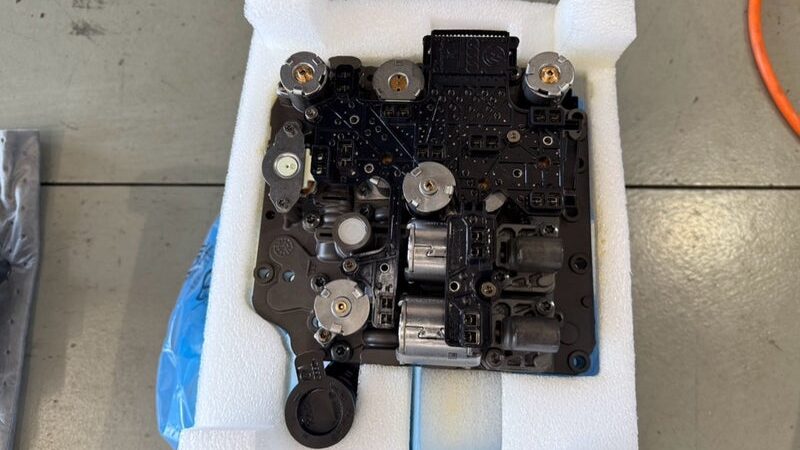
This is an important part that is responsible for the “brain” and “hydraulic control” of the DSG.
- Valve, solenoid, hydraulic circuit, and board are integrated
- When a defect occurs, serious symptoms such as poor shifting, gear slippage, and warning lights are likely to occur.
Common triggers
- Long-term driving in high temperature conditions
- Hydraulic system problems due to aging
- Circuit board or solenoid failure
👉 7-speed dry-type DSG (DQ200) mechatronics structure and accumulator crack recall
👉 DSG mechatronics repair and data transfer
👉 Causes of DSG mechatronics oil leaks and gasket/O-ring replacement points
Wear of the clutch pack (especially dry DSG)
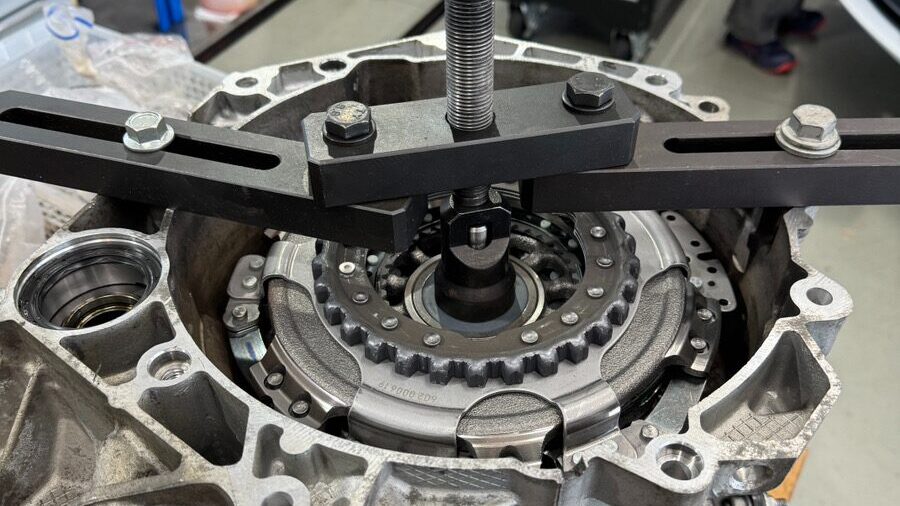
This is a common cause with dry DSGs.
- Symptoms such as a “bang” when starting or a “smooth increase in rotation”
- Wear progresses → Shift shock, judder, clutch slippage
💡Susceptible Usage
- Frequent stop-and-go traffic on congested roads
- Long periods of stopping on slopes and frequent use of the half-clutch
- Repeated high-load driving
👉 Dry 7-speed DSG (DQ200) clutch structure and cause of judder
👉 Wet 6-speed DSG (DQ250) structure explained in detail | Clutch, mechatronics, and pump mechanism
Deterioration of DSG oil (wet DSG)
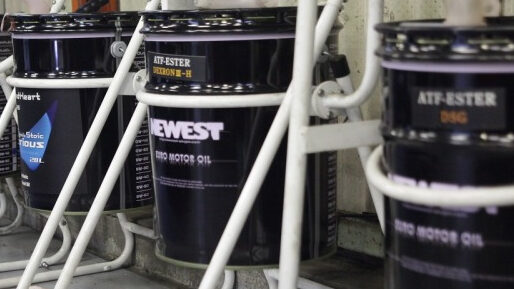
Wet DSGs use oil to cool and lubricate the clutch.
If the oil deteriorates, the oil pressure will become unstable, which can cause gear shift shocks and jumping out of gear.
💡Notes
- Neglecting regular replacement can be a breeding ground for problems
- If you use oil other than genuine oil, there is a risk of poor control.
- DSG oil change | An easy-to-understand explanation of change timing and effects
- Cost and effectiveness of 7-speed wet DSG oil change
- Does a 7-speed dry DSG require no oil changes?
- Explaining the necessity of changing the oil in a 6-speed wet DSG while working
Abnormalities in sensors or control software
If the gear position sensor or ECU (transmission control unit) malfunctions, a discrepancy will occur between the actual gear position and the control,
which can lead to dangerous symptoms such as “warning lights coming on” or “suddenly going into neutral.”
💡Common scenario
- Rainwater and moisture can corrode connectors
- Software malfunctions or missing updates
Overloading or improper driving
Because DSG is a precision mechanism, it is vulnerable to rough operation.
Repeated sudden starts, acceleration, and stops place extra strain on the clutch and mechatronics, increasing the risk of breakdown.
💡Common NG operations
- Press the accelerator and brake at the same time
- Frequent gear changes from D to N to D while stopped
- Continue creeping for a long period of time
DSG malfunctions are caused by both “deterioration of parts over time” and “driving habits.”
In other words, many problems can be prevented with regular inspections and good driving habits .
What happens if you leave the condition untreated?
The vehicle becomes unable to move (the gear does not shift)
- At first, it’s just a bit of a shock
- Gradually, the gears would not shift at all and the car would become unable to move.
- If it occurs on a highway or at an intersection, there is a risk of a serious accident.
Damage to the clutch or transmission body
- Leaving clutch wear and mechatronic failure
unattended → Wear and seizure progress, damaging the transmission itself
→ What would have been a minor problem becomes a major repair
As a result, repair costs could balloon to hundreds of thousands to hundreds of thousands of yen .
Increased risk of accidents
- When starting, I get hesitant and can’t cross the intersection.
- Not accelerating when overtaking and almost colliding with the vehicle behind
- The gears come out while driving and the car suddenly slows down
Especially when you have family members in the car, it’s difficult to say, “It’ll still work, so it’s fine.”
Decrease in vehicle value
- Cars with a history of DSG malfunctions are valued significantly lower in the used car market
- Depending on the repair history, the trade-in or purchase price may differ by hundreds of thousands of yen.
It may be necessary to replace the entire transmission.
- Damage to the transmission itself → Complete replacement
- New ones cost between 500,000 and 800,000 yen, and in some cases over 1 million yen.
At this point, it is not uncommon to be faced with the choice of repairing or replacing the car.
A slight discomfort that makes you wonder, “Is it just my imagination?” is an early sign of DSG trouble. The best way to protect your car and your wallet is to have it inspected and repaired as soon as possible at a VW-certified workshop
before it becomes too late .
Estimated repair and replacement costs
The estimated repair and replacement costs for DSG in VW vehicles are as follows:
| Repair and maintenance details | Estimated cost (tax included) | supplement |
|---|---|---|
| DSG oil change (wet type) | Approximately 30,000 to 50,000 yen | Recommended every 60,000 to 70,000 km |
| Mechatronics unit repair and replacement | Approximately 100,000 to 300,000 yen | Partial repairs and rebuilds available |
| Clutch pack replacement (dry type) | Approximately 150,000 to 250,000 yen | Repair of the clutch alone |
| Complete DSG replacement | Approximately 500,000 to 800,000 yen or more | Severe damage |
You can scroll
👉 Summary of maintenance and customization costs and work days at VW specialty store Nile Plus
Tips for keeping costs down
- By using rebuilt parts (remanufactured products) , you can save hundreds of thousands of yen compared to replacing them with new parts.
- If you ask a specialized workshop , they will have the testers and knowledge to specialize in VW, so you can reduce unnecessary labor costs.
- Early inspection and minor repairs are the smartest way to save money
point
- Regular oil changes are the cheapest option
- Mechatronics and clutches cost between 100,000 and 300,000 yen.
- In the worst case scenario, a complete replacement would cost over 1 million yen.
👉 “If you start to experience any concerning symptoms, go to a specialist workshop as soon as possible” will ultimately lead to savings on repair costs .
Related articles:DSG/Transmission
- Explained: The 6-Speed Wet DSG (DQ250)
- Won’t Move in D Range: Causes of 7-Speed Dry DSG (DQ200) Failure and What to Do
- Does the 7-Speed Dry DSG (DQ200) Need an Oil Change? Costs, Procedure, and Facts
- DQ200 Dry DSG Clutch Guide: Design, Replacement Cost, Judder Symptoms, and Longevity Tips
- Is DSG Judder in the 7-Speed Dry DSG (DQ200) Really Just a Clutch Problem?
- A Complete Guide to the 7-Speed Dry DSG Mechatronics
- Inside the Shop: Rebuilding DSG Mechatronics
- DQ381 Wet DSG Oil Change Guide: When to Service, Cost, Time, and Filter Replacement
- DSG Mechatronics Oil Leak: Causes, Repair Costs, and O-Ring & Gasket Replacement Tips
Daily inspection and prevention methods
To prevent DSG problems, always keep the following points in mind:
Change the DSG oil regularly (if wet).
Oil deterioration is a major cause of problems, so be sure to follow the oil change cycle recommended by the manufacturer.
Be careful when starting and stopping
Avoid sudden starts and stops, and drive in a way that is gentle on the clutch and transmission.
Don’t ignore warning lights or unusual behavior
If you experience any small gear shift shocks or a warning message appears, have your vehicle inspected immediately.
Request a transmission diagnosis during vehicle inspection or regular maintenance
A professional diagnostic check can help detect any early-stage abnormalities.
Don’t ignore any discomfort and deal with it promptly
The DSG in VW vehicles is an amazing technology that enhances the enjoyment of driving, but because it is so precise, the damage caused by problems tends to be greater.
By noticing any abnormalities early and being mindful of proper maintenance and driving operation, you can make the most of the DSG’s original performance for as long as possible.
To continue enjoying your VW life with peace of mind, be sure to pay attention to your DSG.
Your beloved car will surely respond to your careful consideration.
Frequently Asked Questions (FAQ)
Q1. What is the difference between dry DSG and wet DSG?
A. Dry clutches are not immersed in oil, so they are lightweight, have low loss, and are more fuel efficient.
They tend to wear out easily in traffic jams or when the clutch is half-clutched.
Wet clutches are cooled and lubricated with oil, so they are heat-resistant and durable , and are often used in high-torque vehicles.
Q2. What is the main cause of judder (rattle vibration when starting)?
A. With dry clutches, the most common issues are wear on the clutch surface, poor contact, and adhesion of powder .
With wet clutches , oil deterioration and disturbances in hydraulic control are involved. Misalignment in the ignition/throttle learning on the engine side can also be a factor in making the issue worse.
Q3. What happens if I leave the judder unattended?
A. Worsening vibration → abnormal wear of the clutch → increased load on the mechatronics and transmission .
As a result, there is a risk that repair costs will balloon to hundreds of thousands of yen . Early inspection is the best course of action.
Q4. When should I change the DSG oil?
A. The general rule of thumb is to wet test every 60,000 to 70,000 km .
We recommend testing earlier depending on the driving environment (traffic jams, high temperatures, mountain roads). Dry testing is not required in principle, but should be performed if there is an abnormality or maintenance is required.
- DSG oil change | An easy-to-understand explanation of change timing and effects
- Cost and effectiveness of 7-speed wet DSG oil change
- Does a 7-speed dry DSG require no oil changes?
- Explaining the necessity of changing the oil in a 6-speed wet DSG while working
Q5. Which is better, mechatronics repair or replacement?
A. It depends on the symptoms and the part that is broken. In cases where a partial repair/rebuild of the solenoid or valve body is sufficient , cost reductions can be expected. In cases
of severe problems or defective circuit boards, a complete replacement is more realistic. A dedicated diagnosis is a prerequisite.
👉Nile Mecha Channel: [DSG] Mechatronics rebuild live! Nile x TOYS rebuild project begins!
Q6. What is the estimated cost?
A. The guidelines are as follows:
- DSG oil change (wet) : Approximately 30,000 to 50,000 yen
- Mechatronics repair/replacement : Approximately 100,000 to 300,000 yen
- Dry clutch replacement : Approximately 150,000 to 250,000 yen
- Complete DSG replacement : Approximately 500,000 to 800,000 yen or more
*Varies depending on vehicle model, year, and symptoms.
👉 Summary of drive and transmission problems | Repair costs and solutions for DSG, clutch, etc.
Q7. Will this be improved with a software update?
A. There are cases where shocks and sluggishness can be improved by updating the shift control logic or learning values . If the cause is mechanical wear, physical repair is required. Make your decision based on the diagnosis results.
Q8. What are some tips for prevention?
A. Careful starting and stopping , minimizing half-clutch use in traffic jams , regular wet oil changes , and early inspection of warning lights and other unusual conditions are effective. Learning value reset and appropriate clutch calibration are also effective (factory-implemented).
Q9. What should I check when buying a used item?
A. The key points are vibration/shock when starting and at low speeds , delayed gear changes , warning history , oil change history (wet type) , and checking the remaining clutch fluid and learning value . A test drive and diagnostic check will give you peace of mind.
Q10. Is it possible to do DSG maintenance yourself?
A. It is not recommended . There are many processes that require a dedicated tester
, such as oil volume, oil temperature, learning value, and hydraulic control, and mistakes can lead directly to serious malfunctions . Leave it to a VW-compatible workshop .
We also recommend these articles:
- Volkswagen Abnormal Noise Diagnostic Guide | Causes, Repair Costs, and Urgency
- Summary of causes of poor running performance | Check points when your car won’t move forward, is unstable, or vibrates
- A comprehensive guide to VW suspension problems, repairs, and maintenance | Basics of bushings, suspension, bearings, and alignment, and symptom-specific checks
▼List of individual articles on DSG repair and maintenance▼



コメント